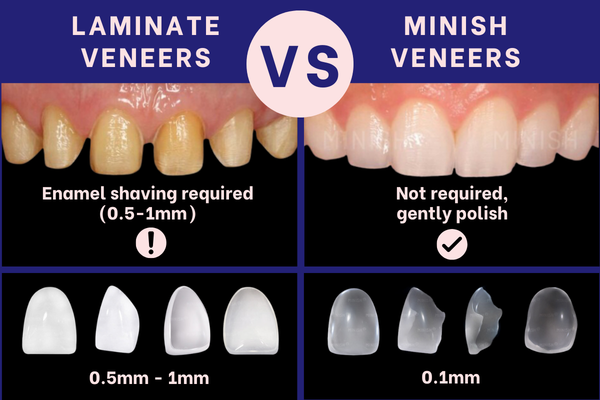
MINISH vs No-Prep Laminate Veneers: What’s the Difference?
Welcome to MINISH Dental Hospital—Smile Care for Medical Travelers
If you’re considering cosmetic dental treatment in Korea, you’ve likely come across laminate veneers and MINISH and wondered which option is safer, more natural-looking, and better for long-term tooth health. This guide explains the differences in a clear, clinic-based way—especially for international patients who want both great aesthetics and conservative dentistry.
Contents
- What Are Laminate Veneers?
- “No-Prep Veneers”: Why the Term Can Be Misleading
- When “No-Prep Veneers” May (Rarely) Be Appropriate
- MINISH vs. No-Prep Veneers: Key Differences That Matter to Medical Tourists
- Purpose: Cosmetic Enhancement vs. Tooth Restoration
- Treatment Range: Front Teeth Only vs. All Teeth (Including Molars)
- Bonding & Longevity Considerations
- Clinical History: New Marketing Trend vs. A System Developed Since 2009
- Who Performs It: General Simplicity vs. Specialized Training
- Materials: Zirconia/E.max vs. MINISH Block (Tooth-Like Properties)
- Warranty: Varies Widely vs. Up to 10 Years
- Why Many International Patients Choose MINISH in Korea
- Planning Your Visit: What We Recommend Before You Travel
- Contact Us
- Start Your New Smile Today
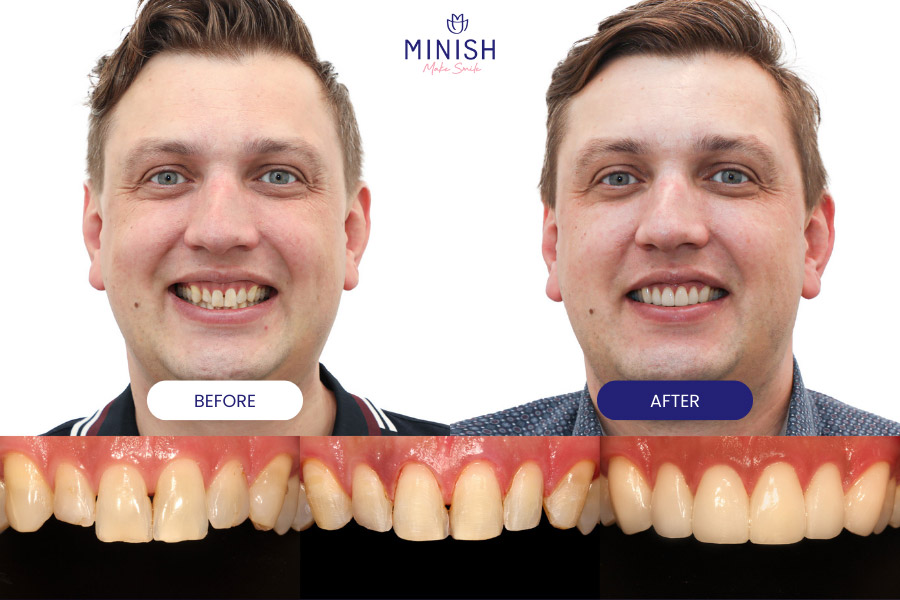
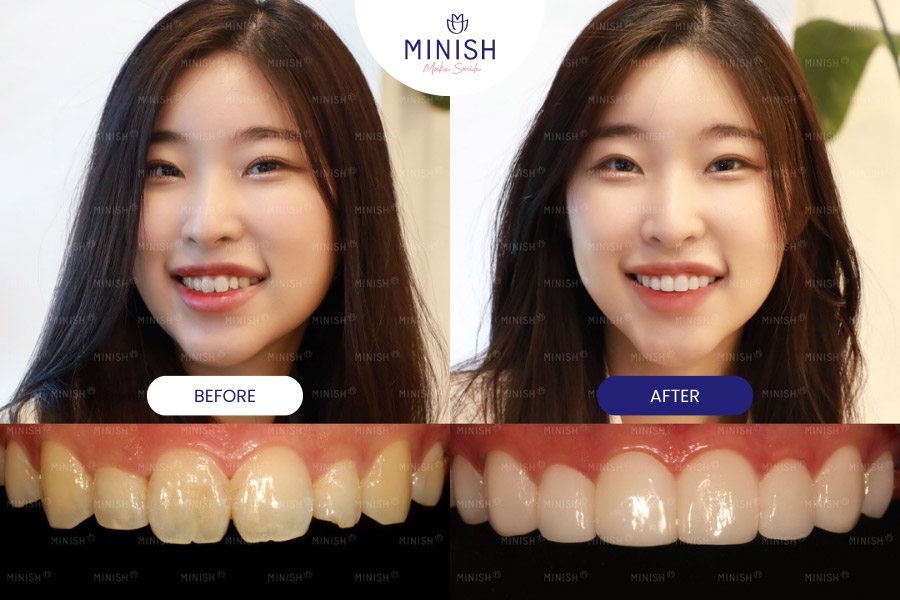
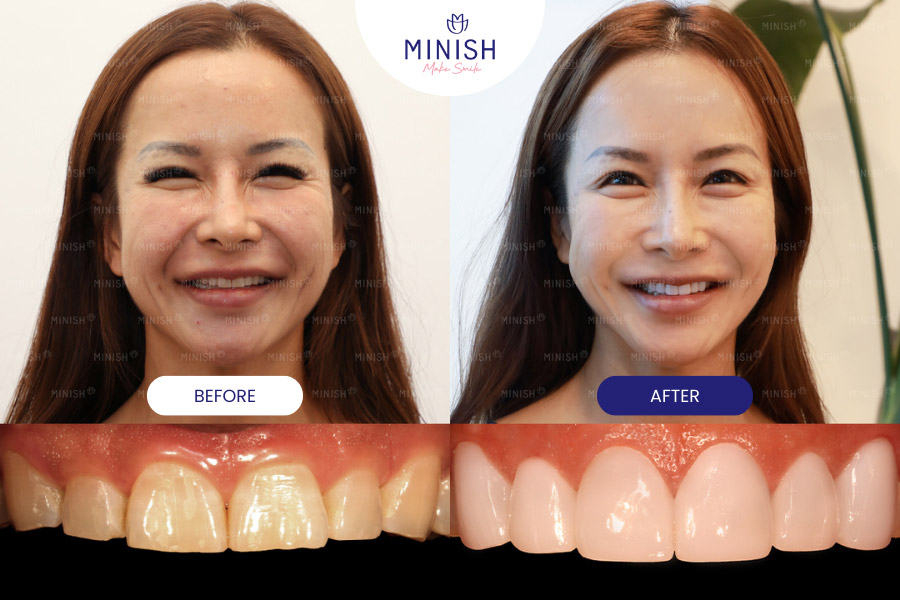
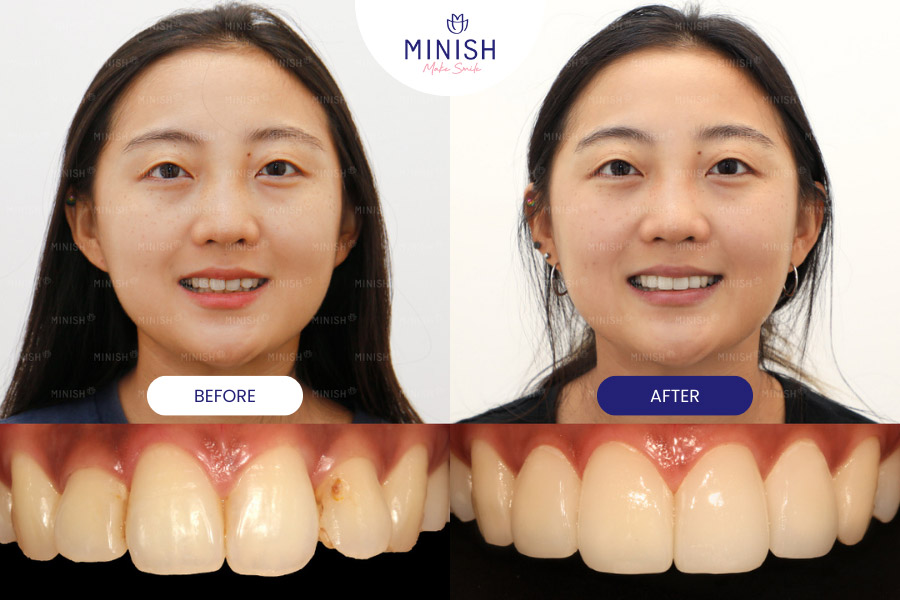
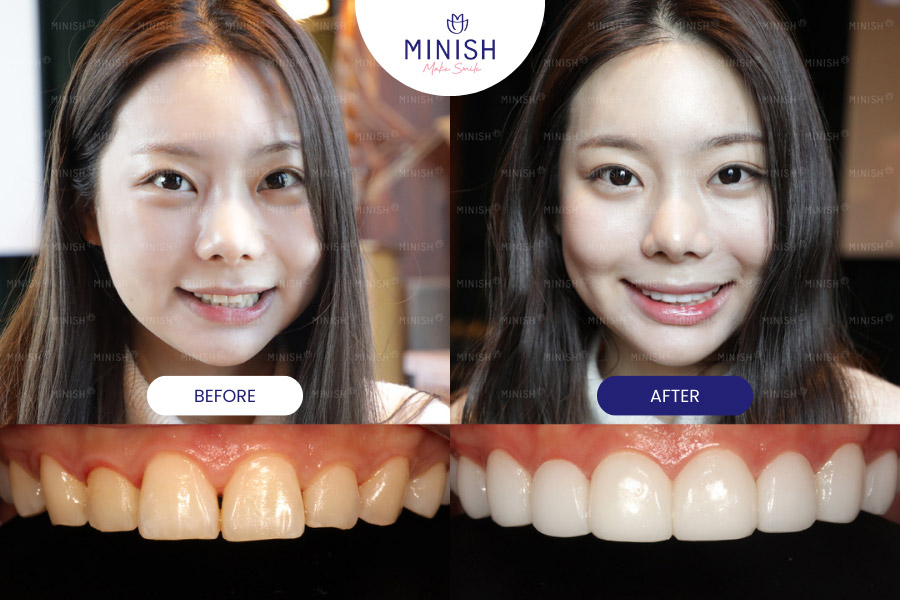
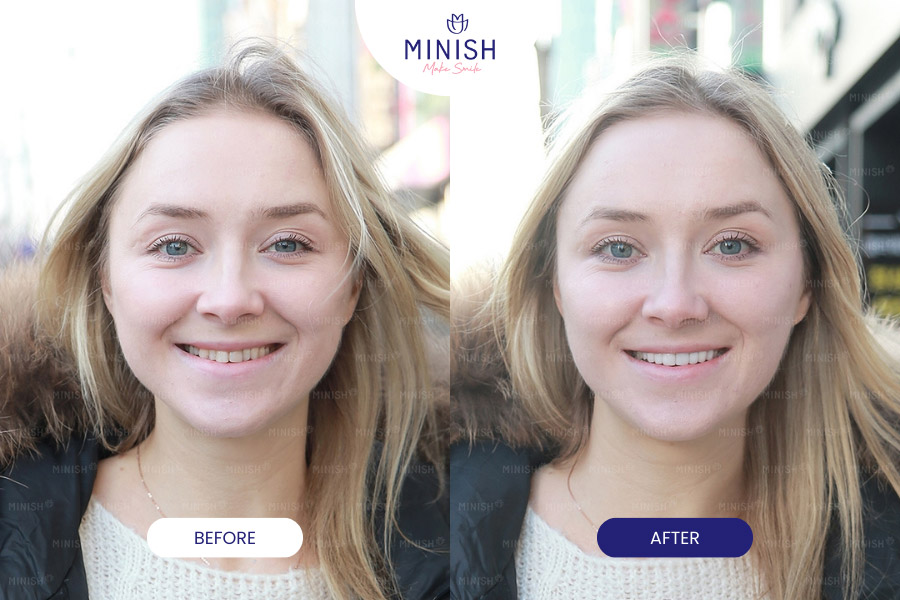
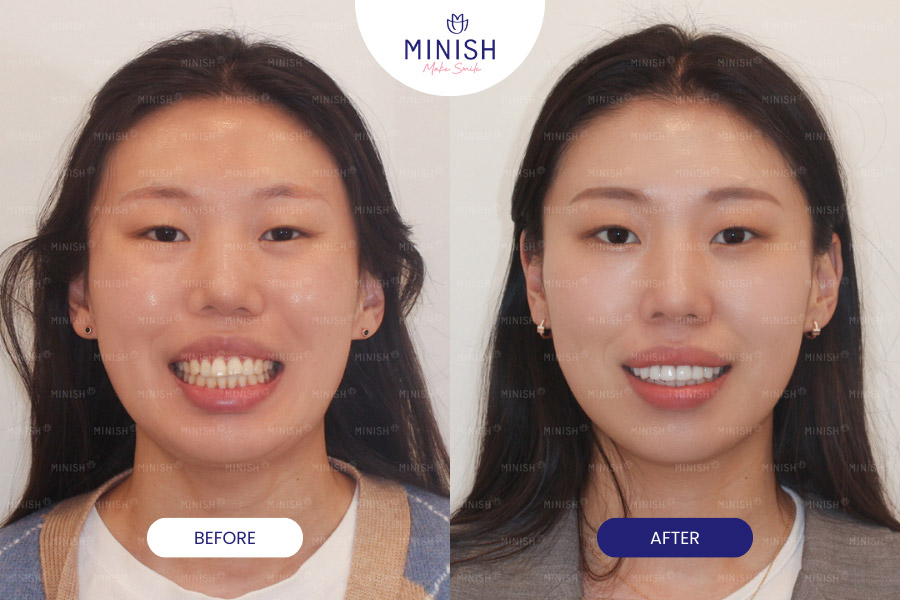
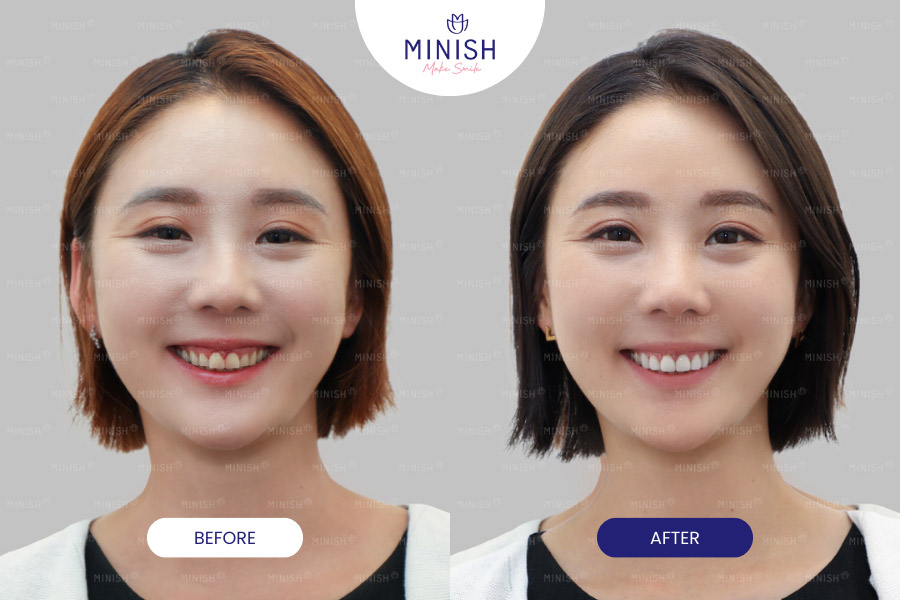
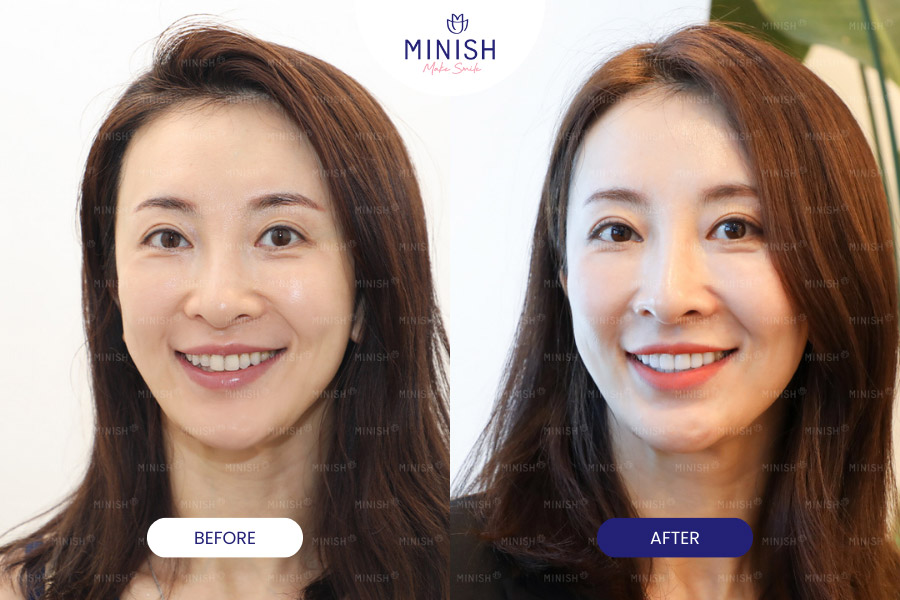
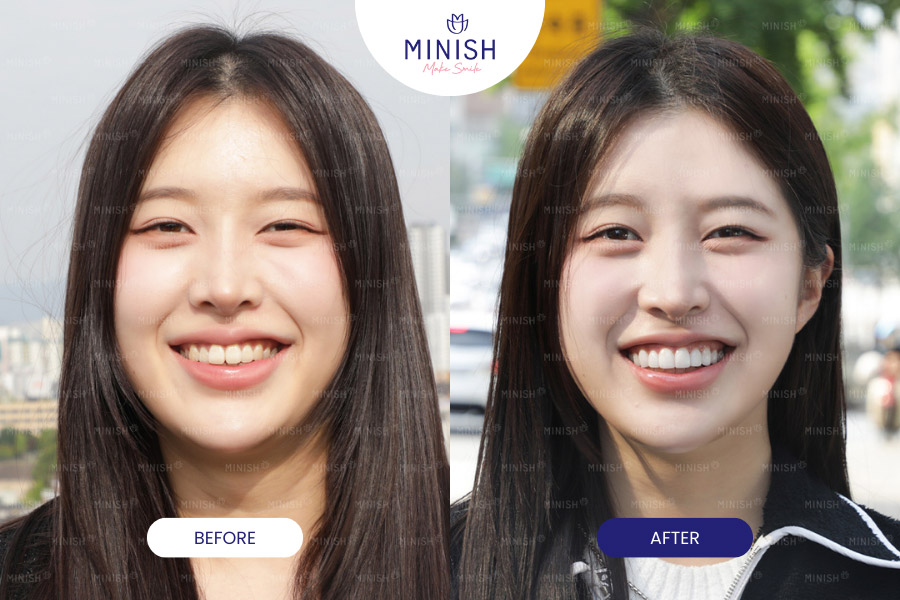
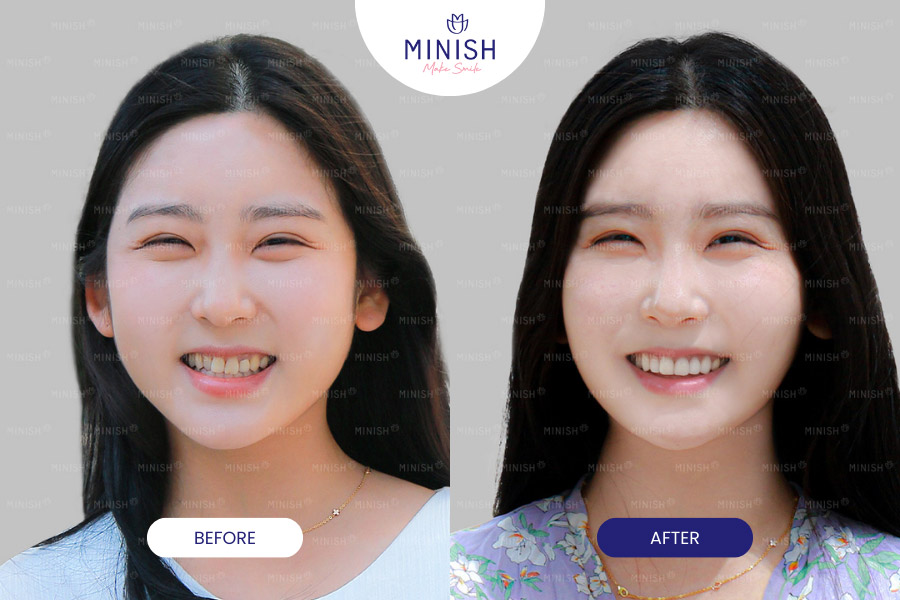
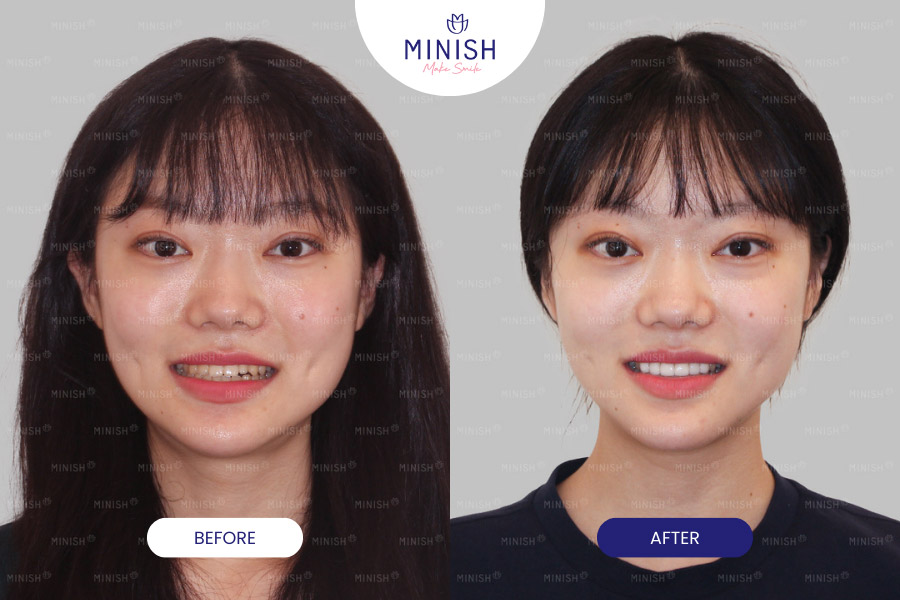
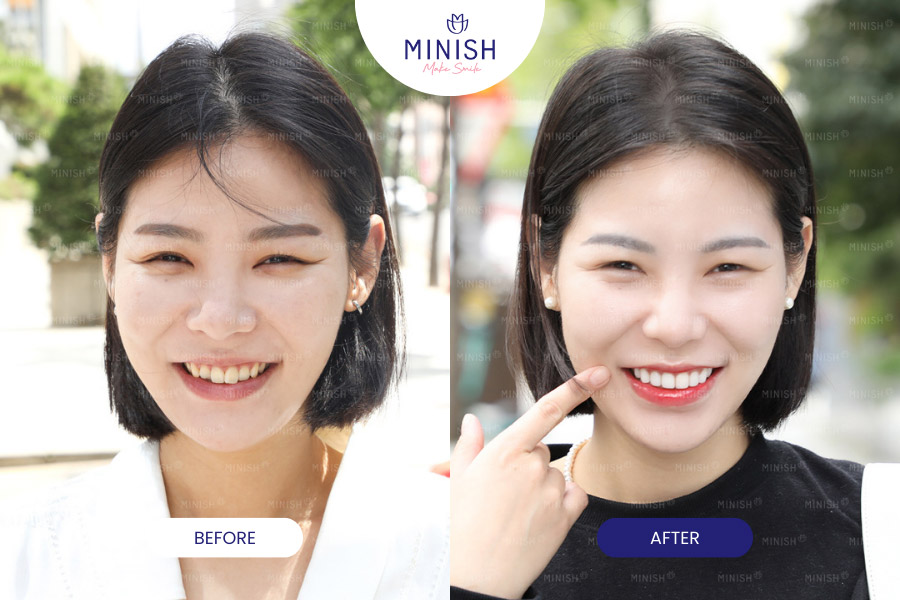
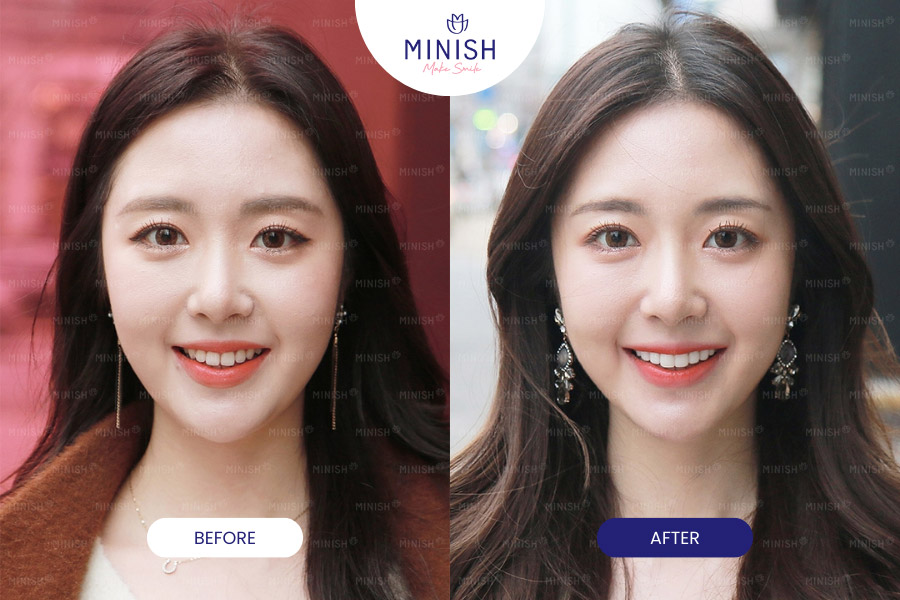
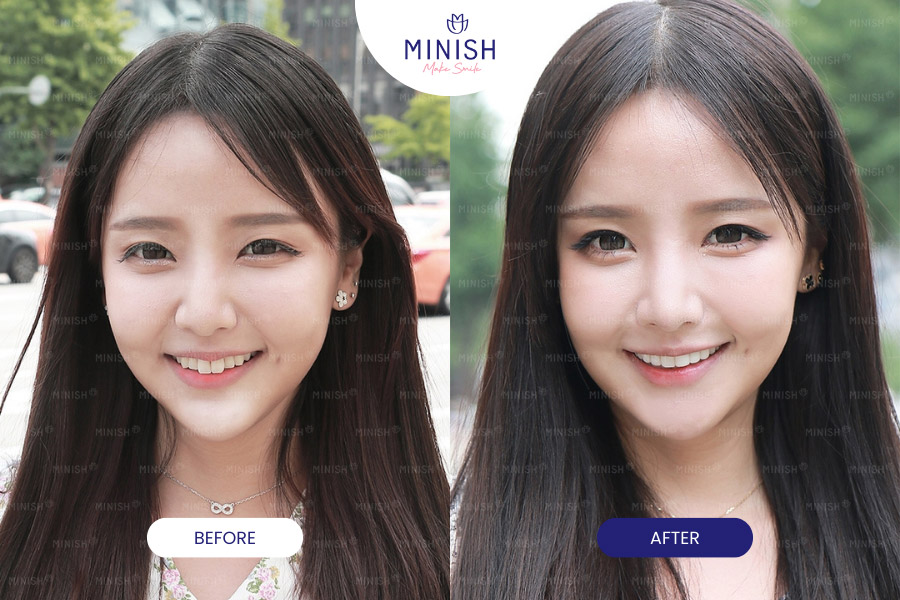
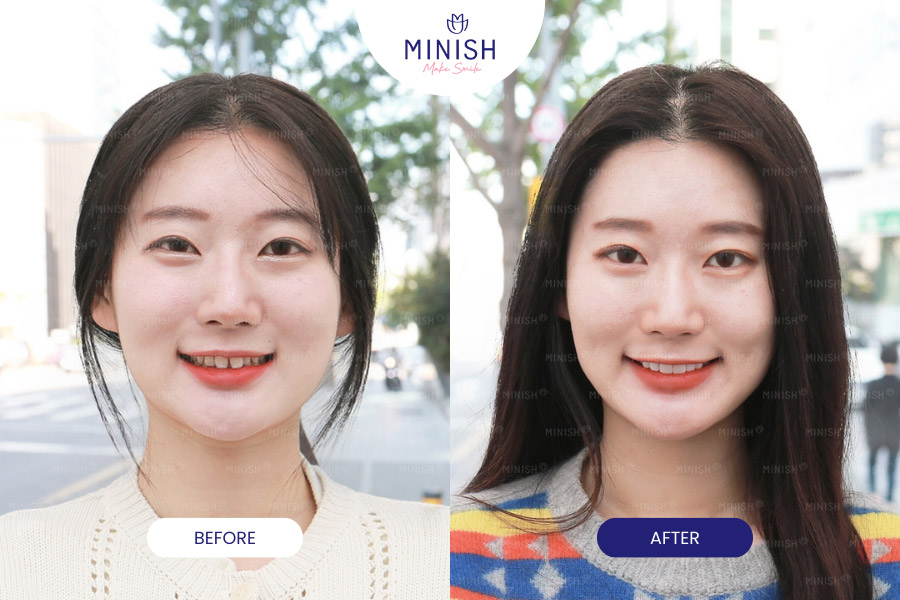
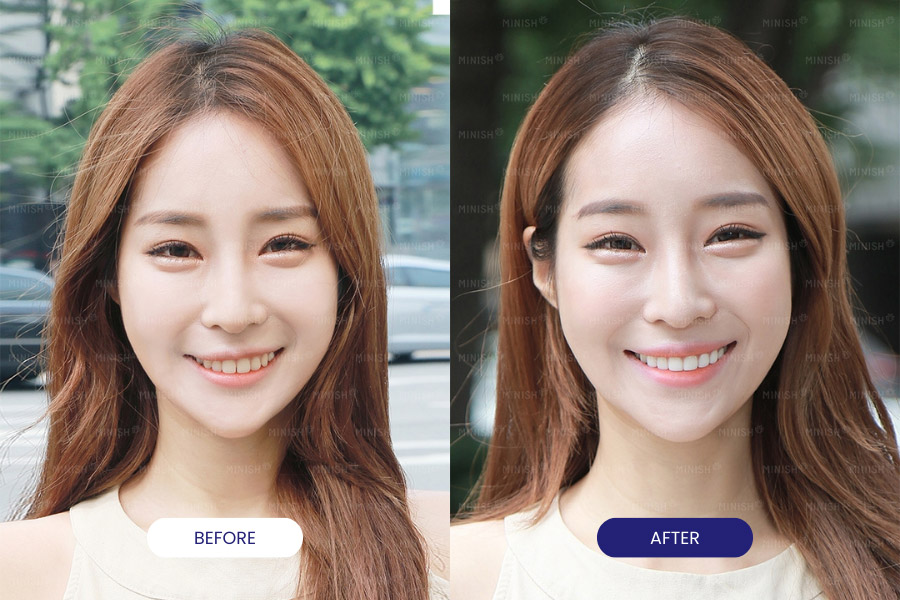
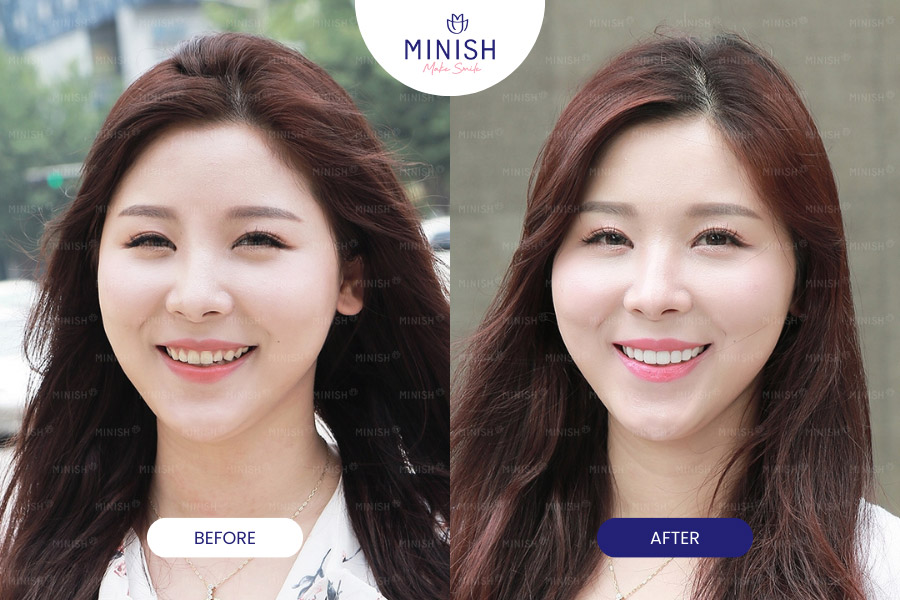
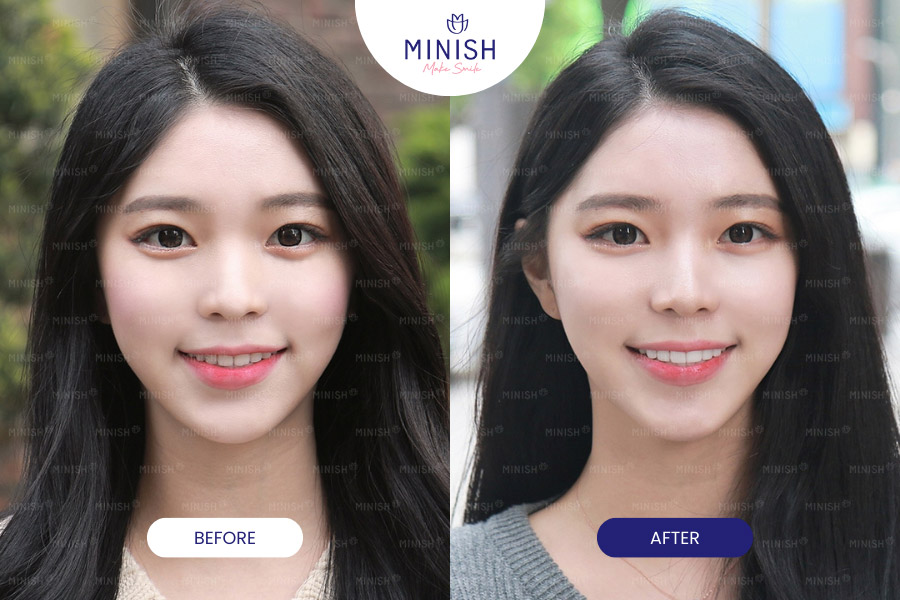
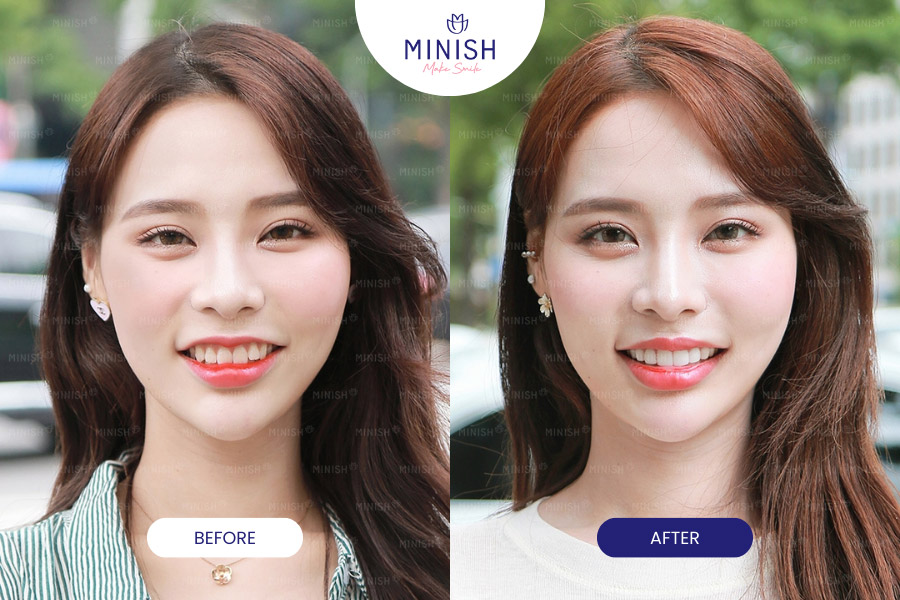
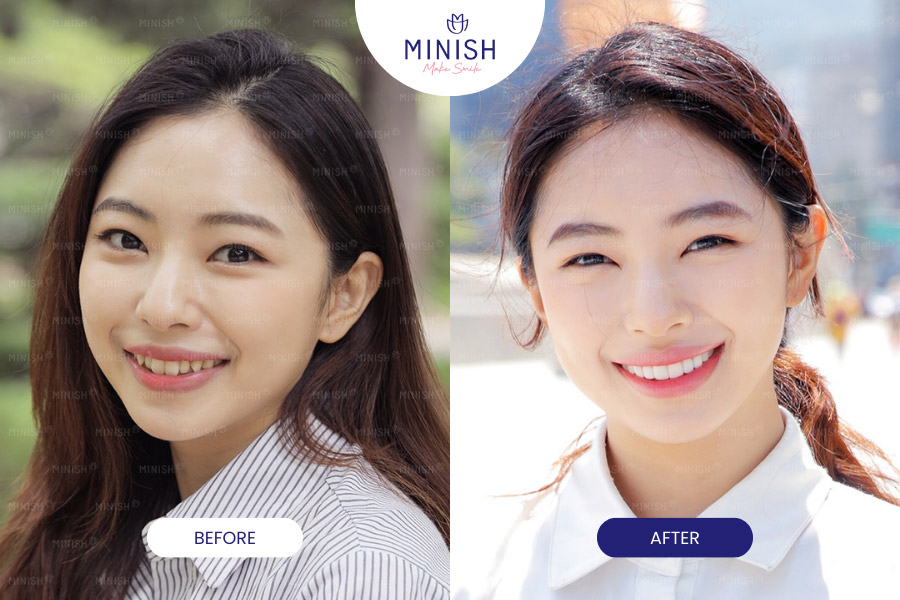
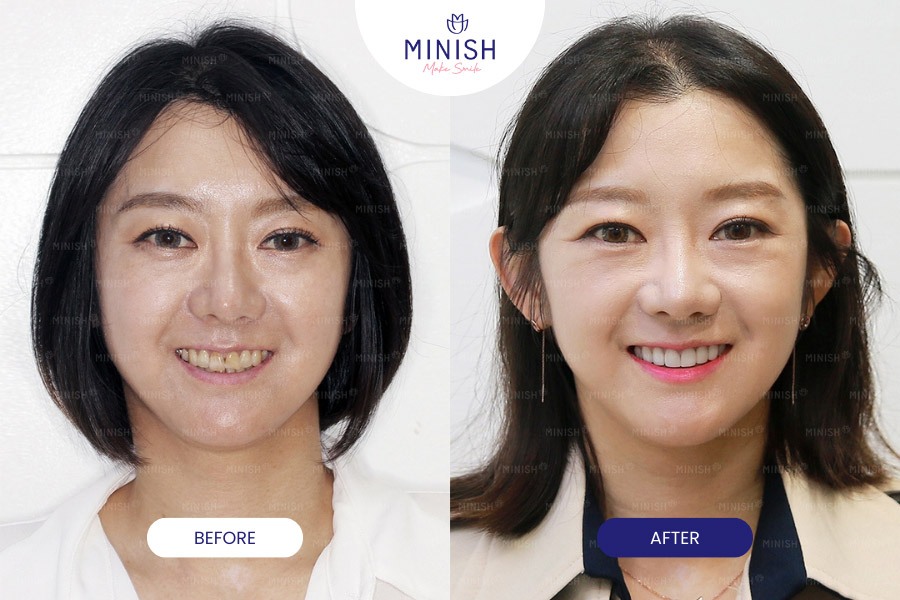
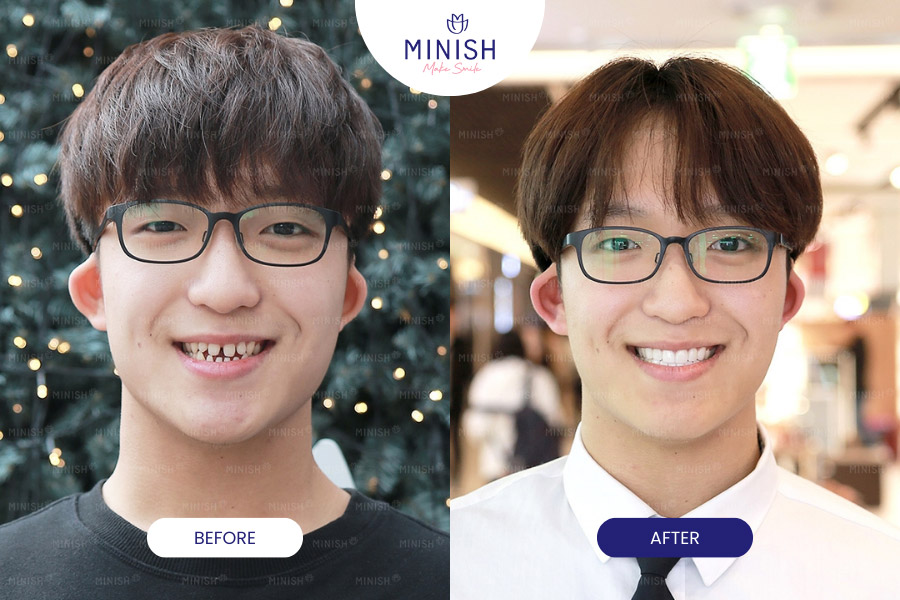
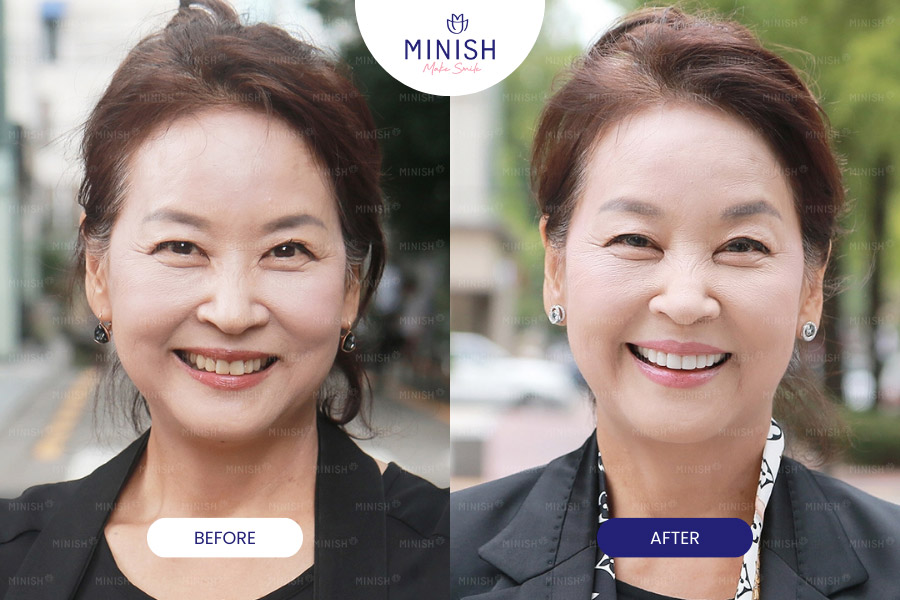
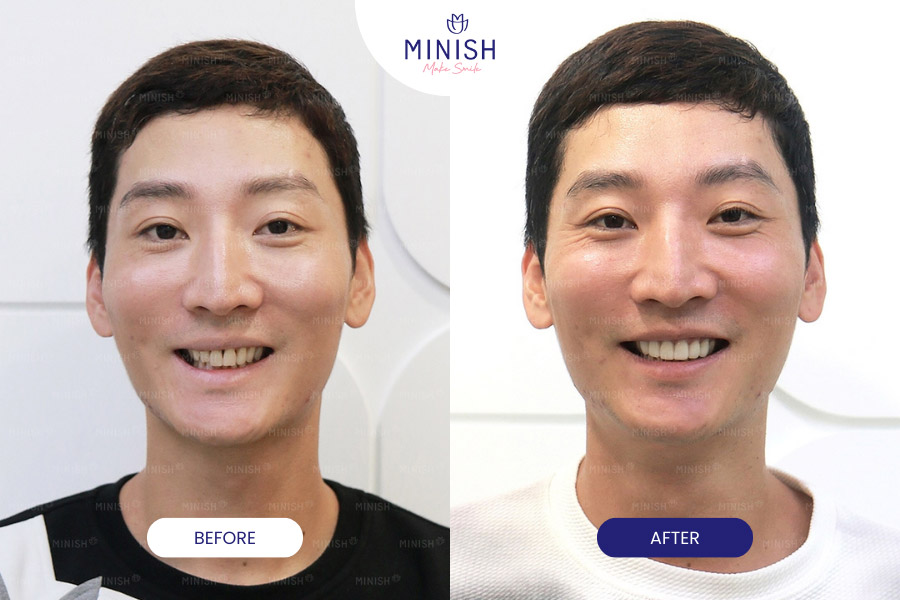
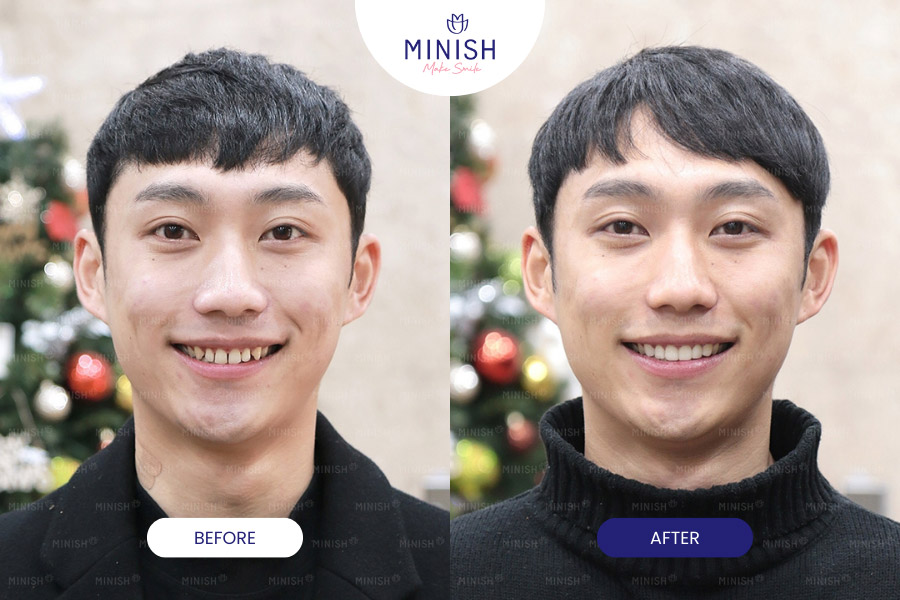
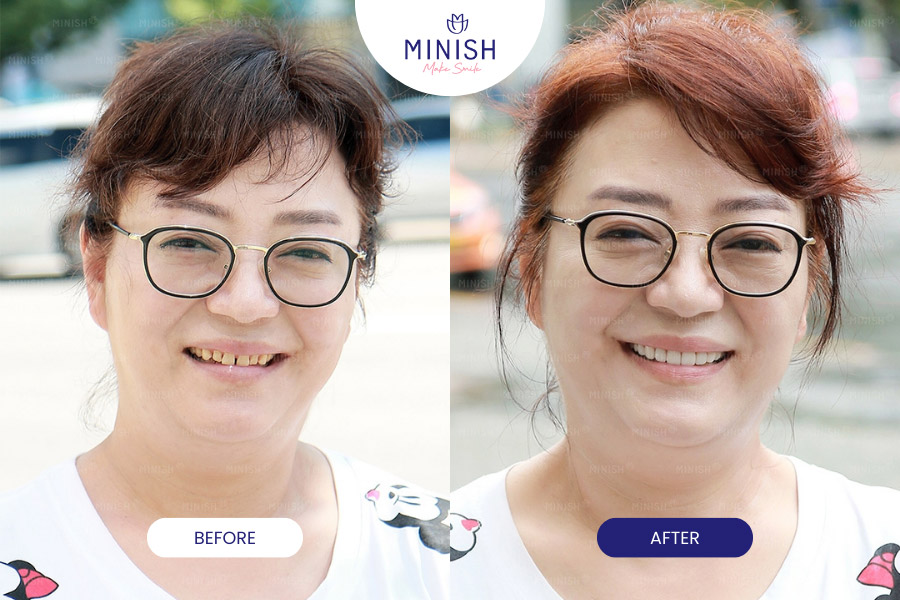
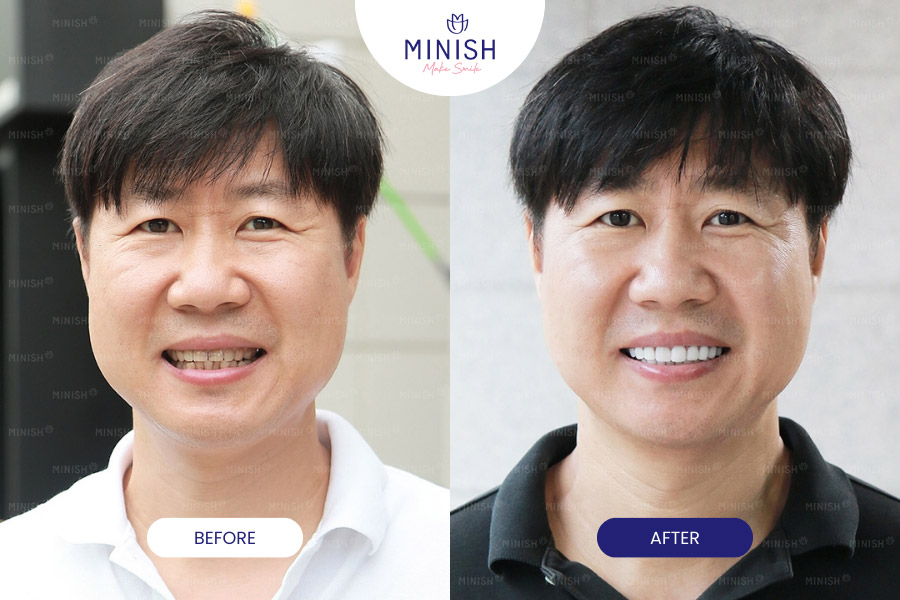
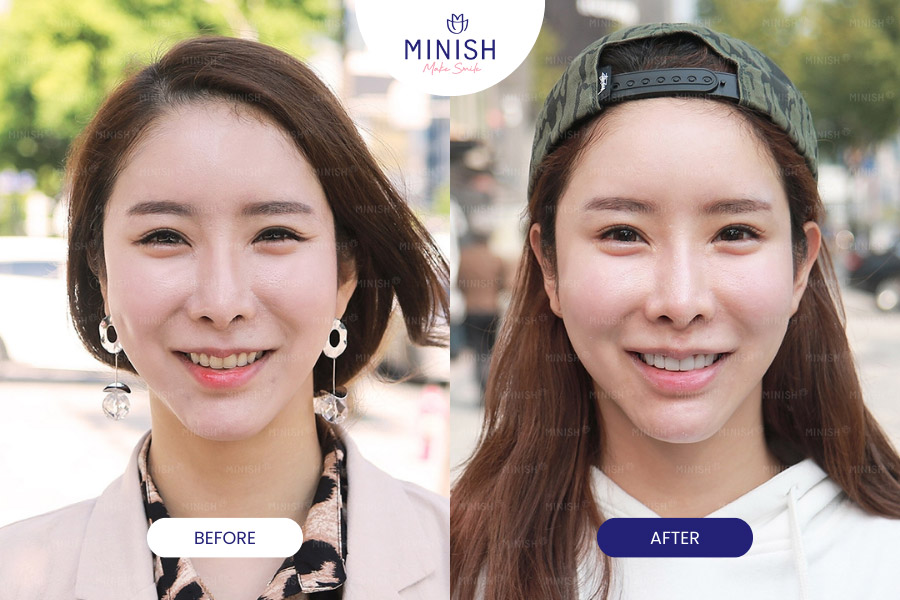
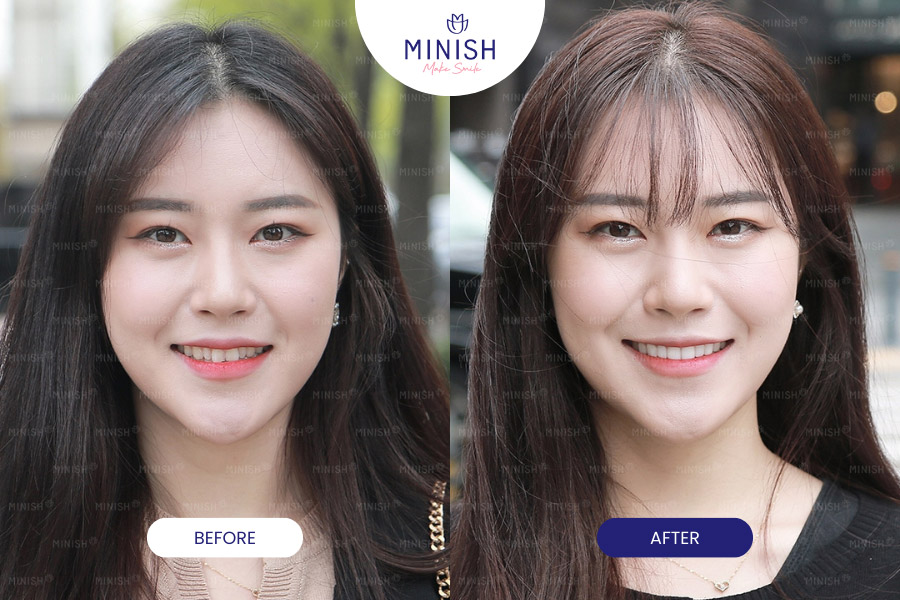
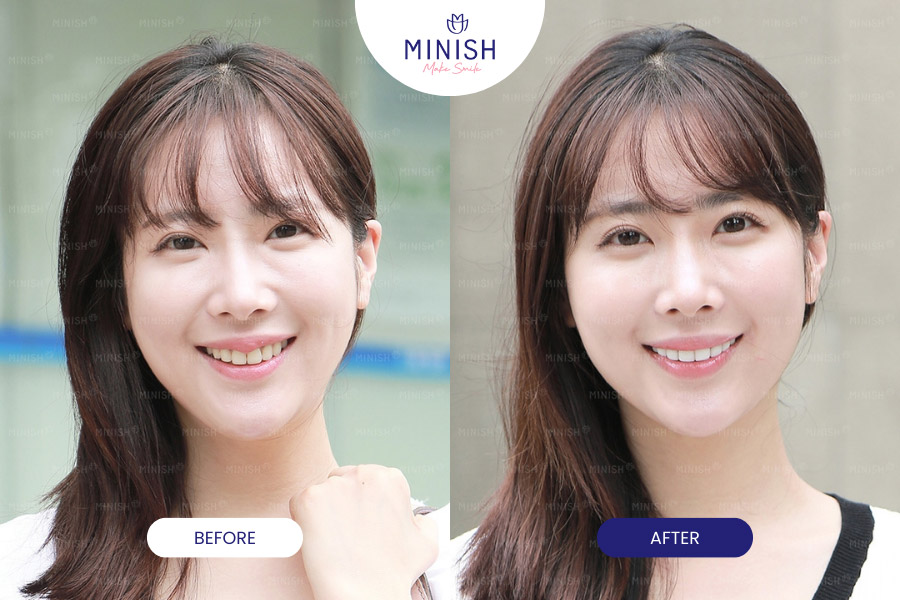
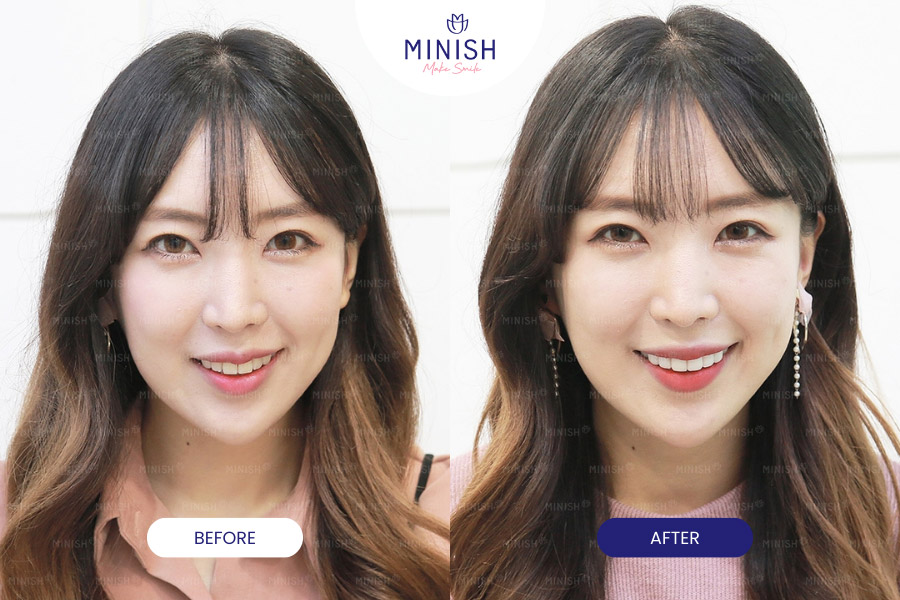
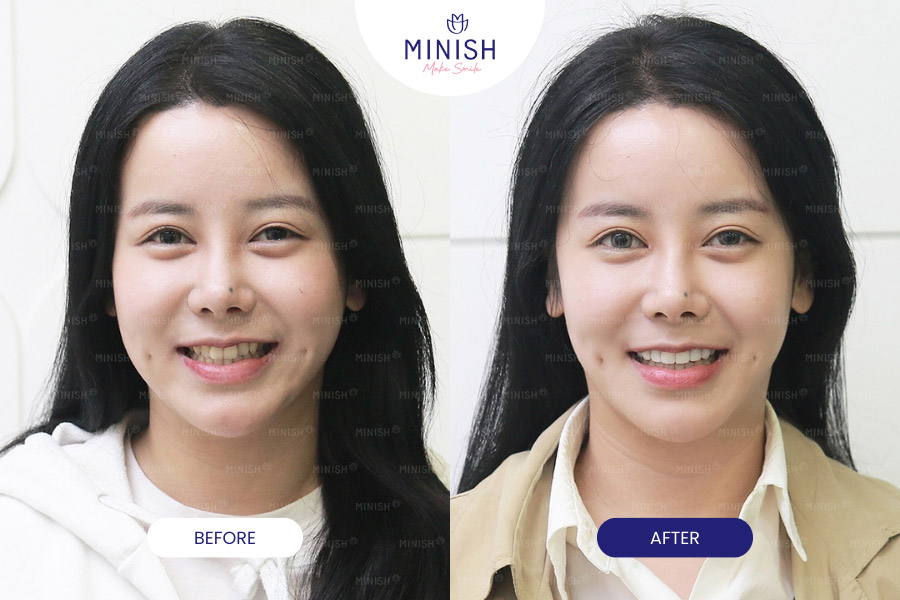
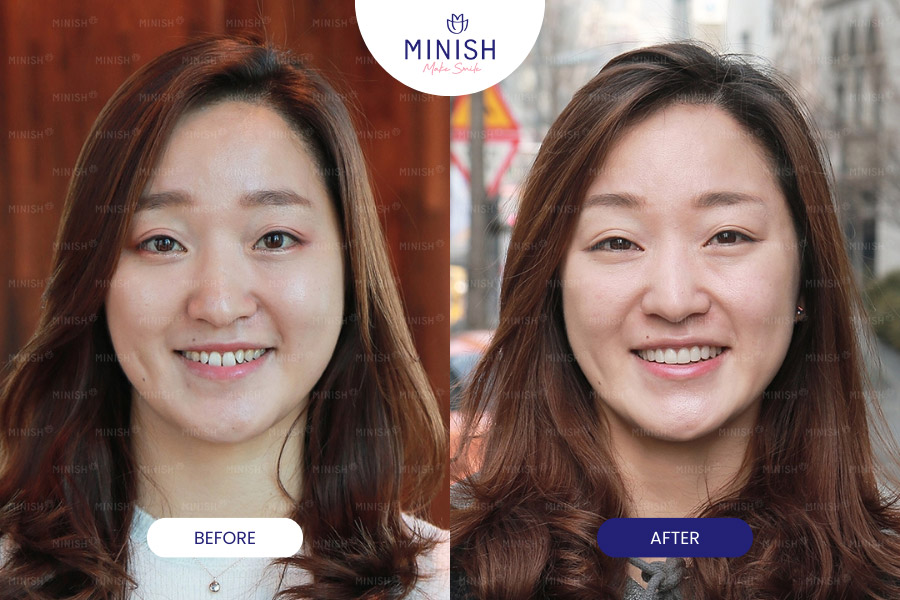
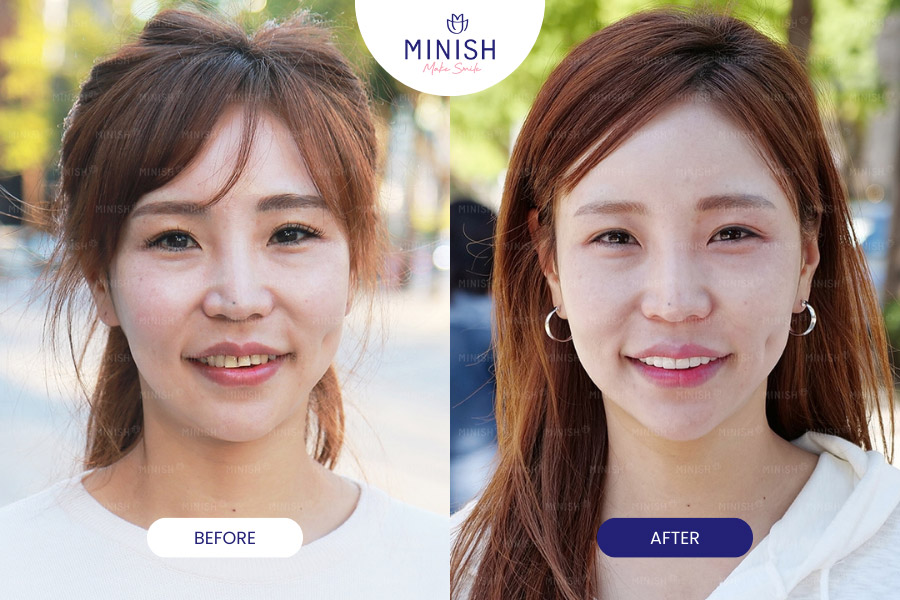
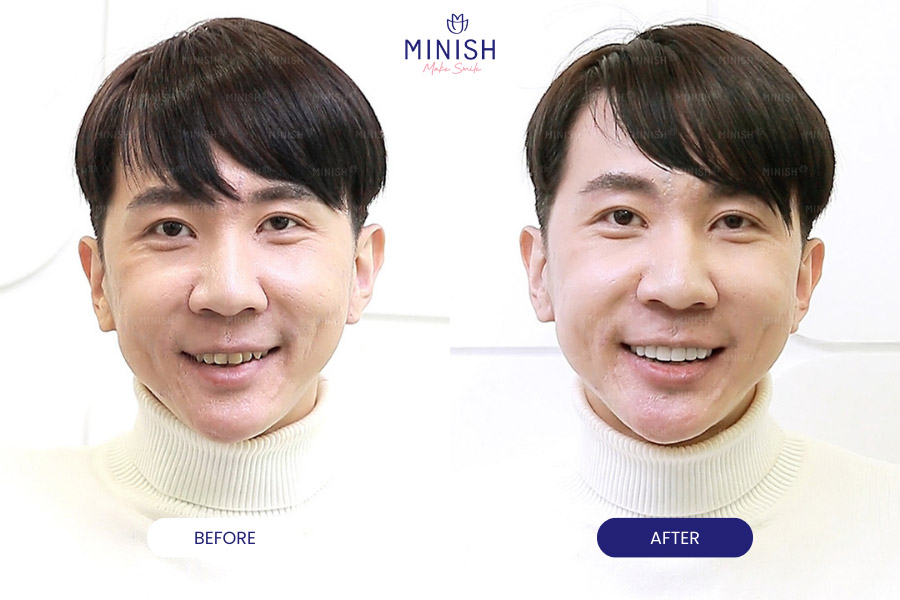
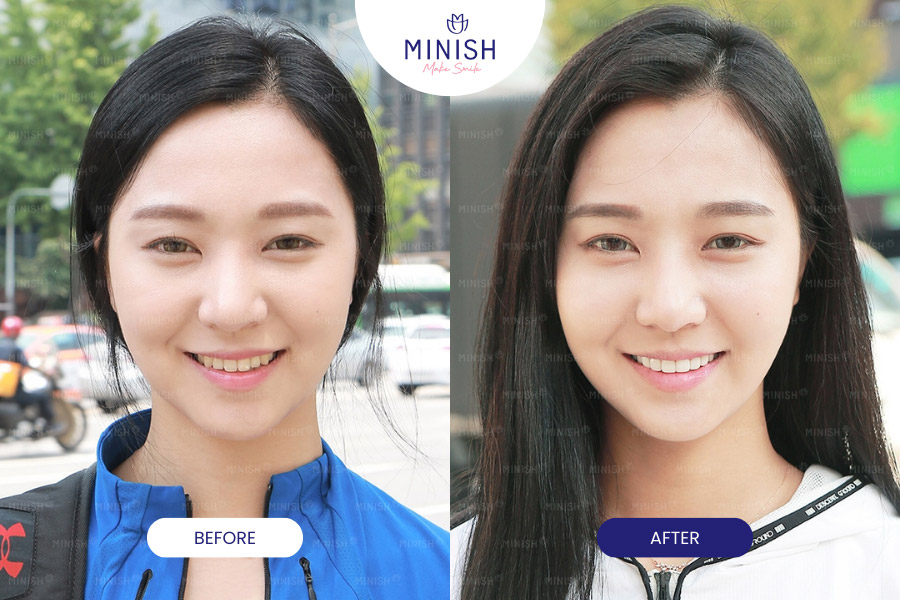
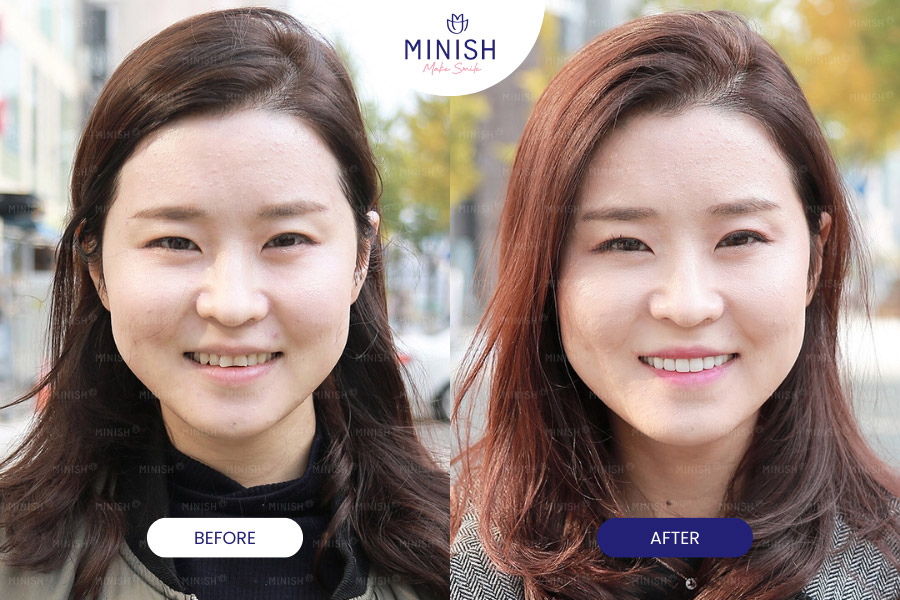
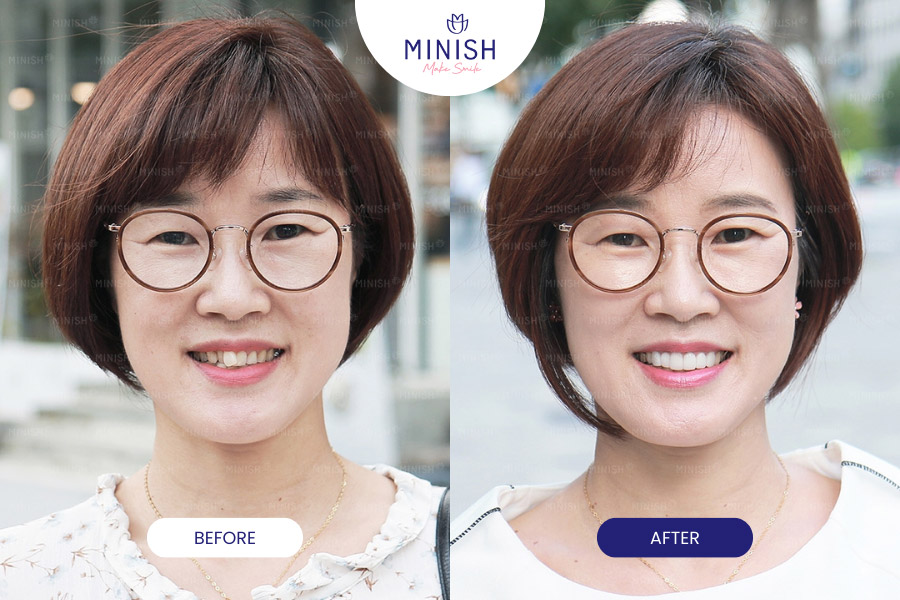
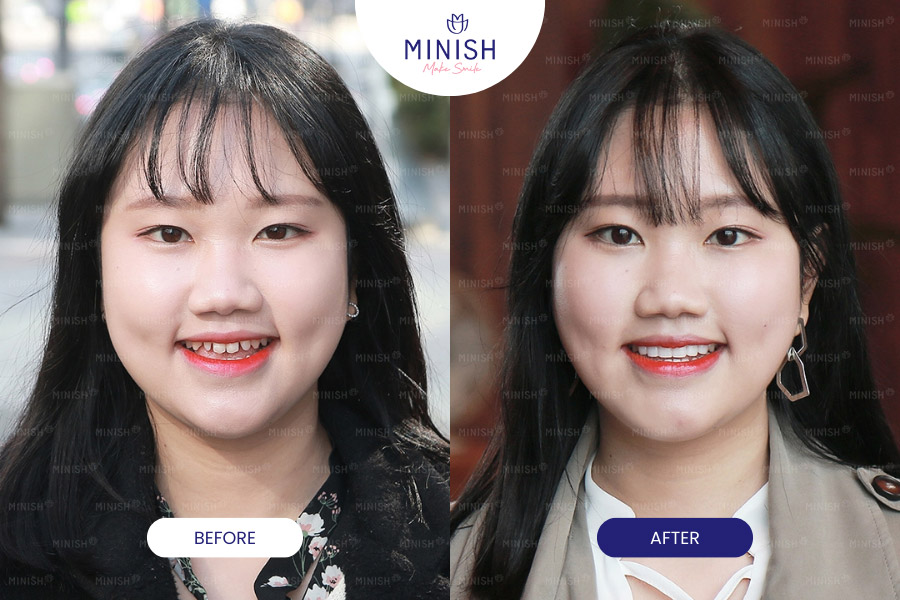
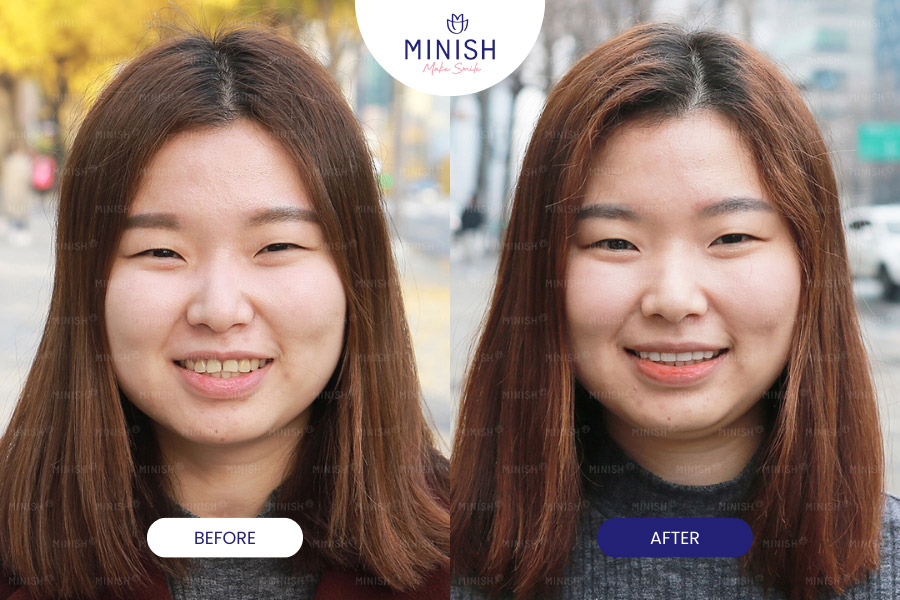
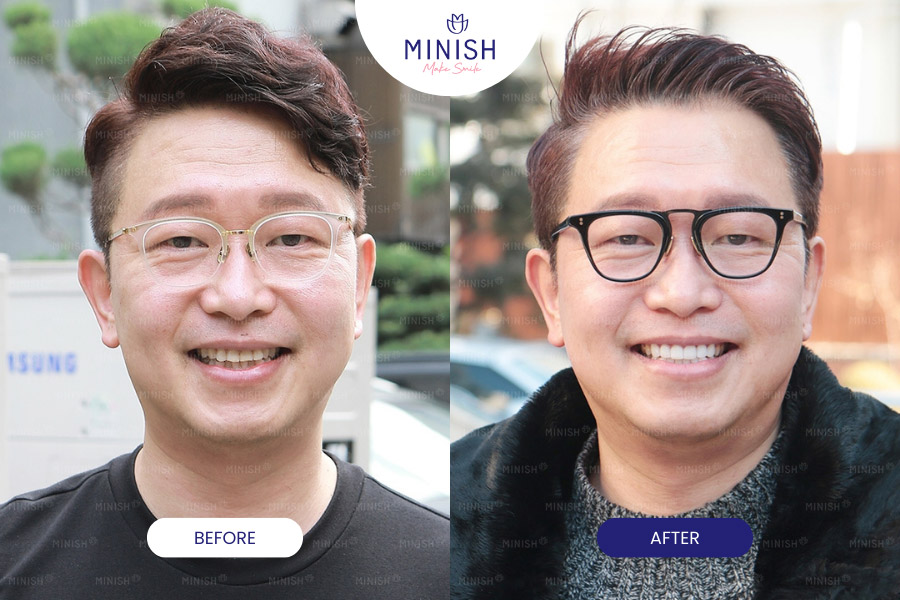
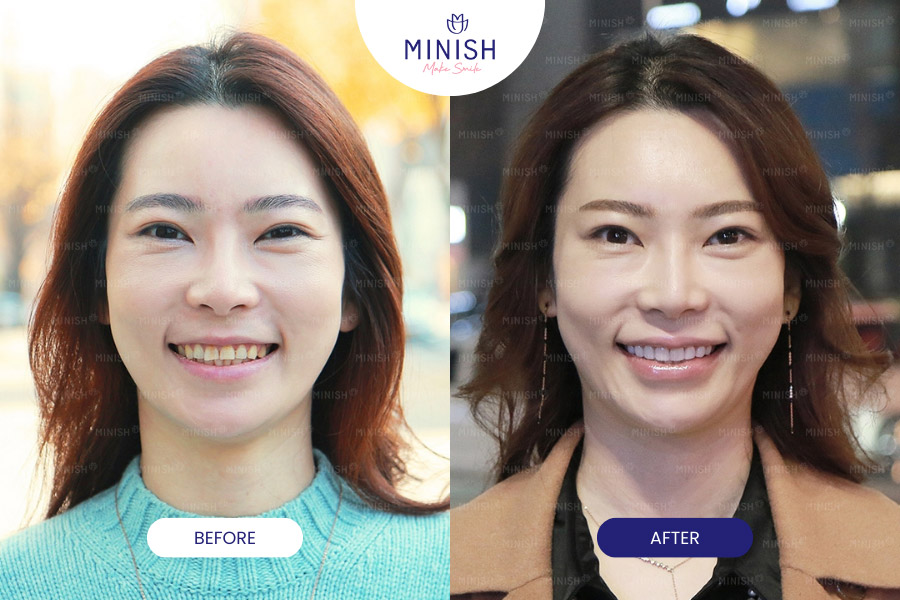
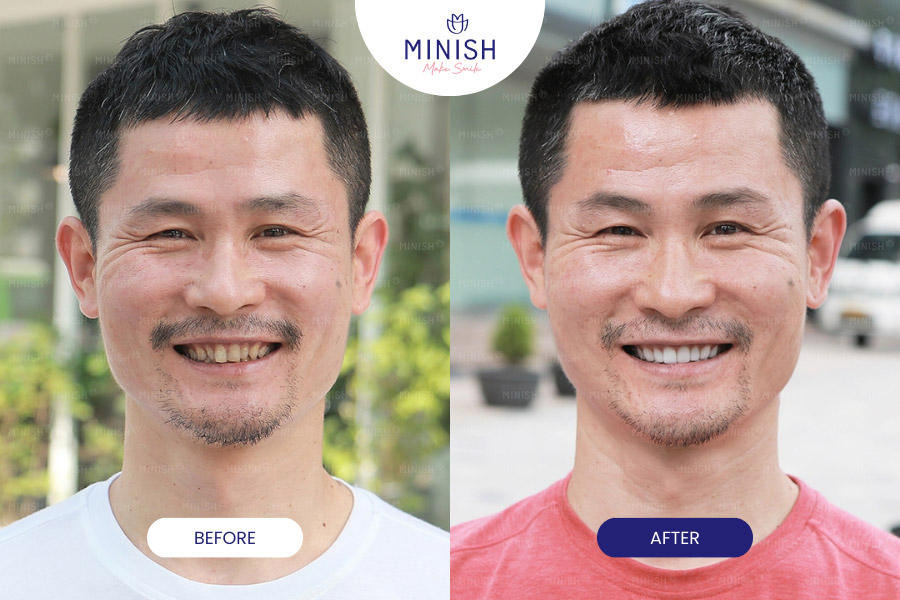
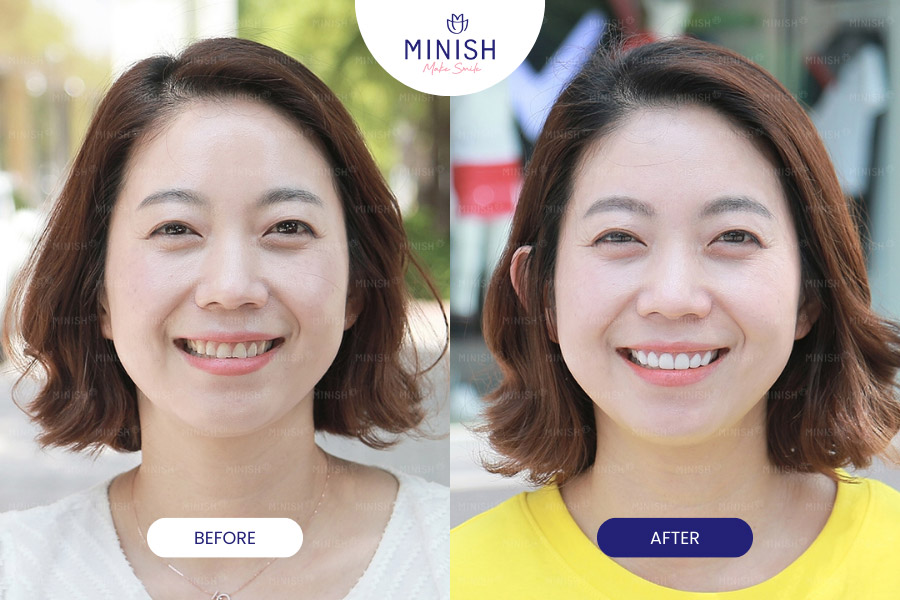
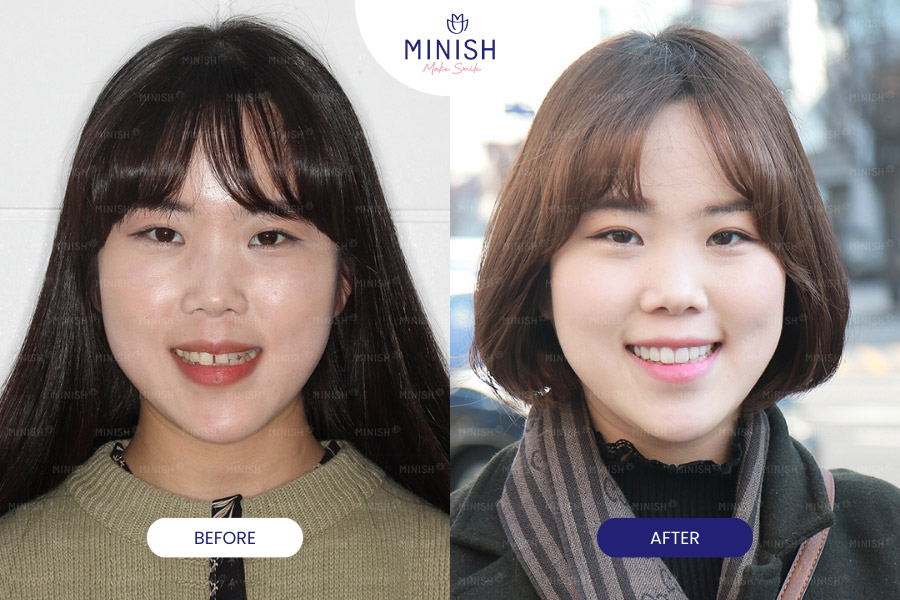
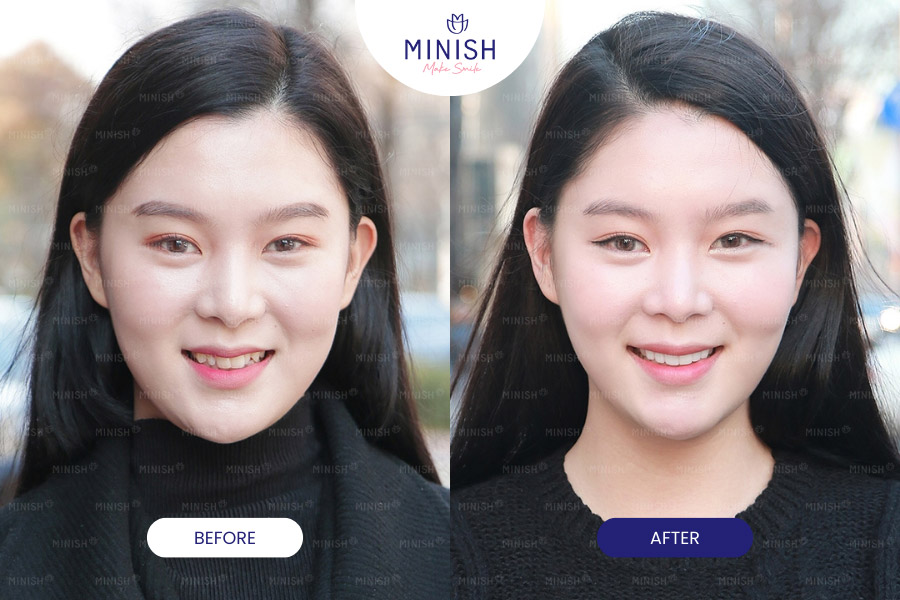
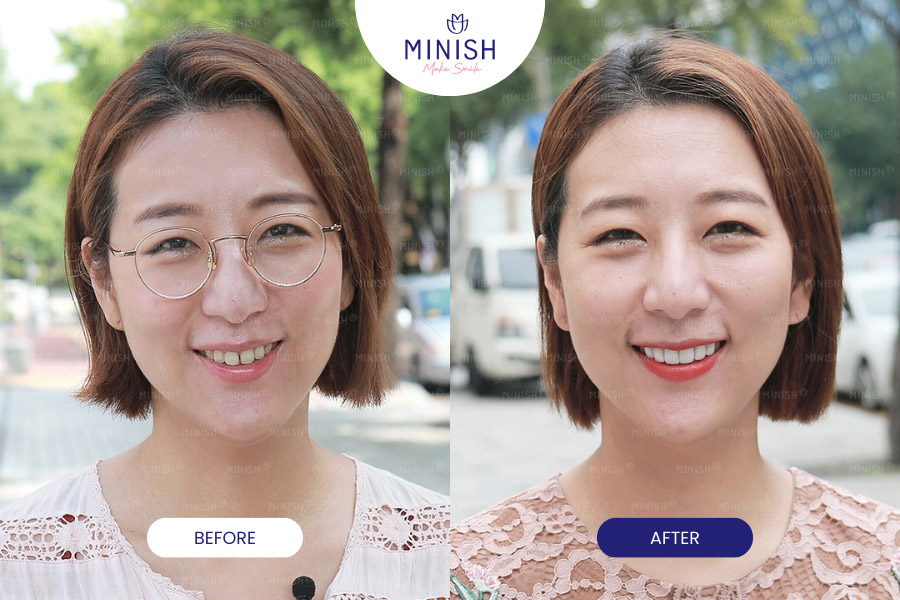
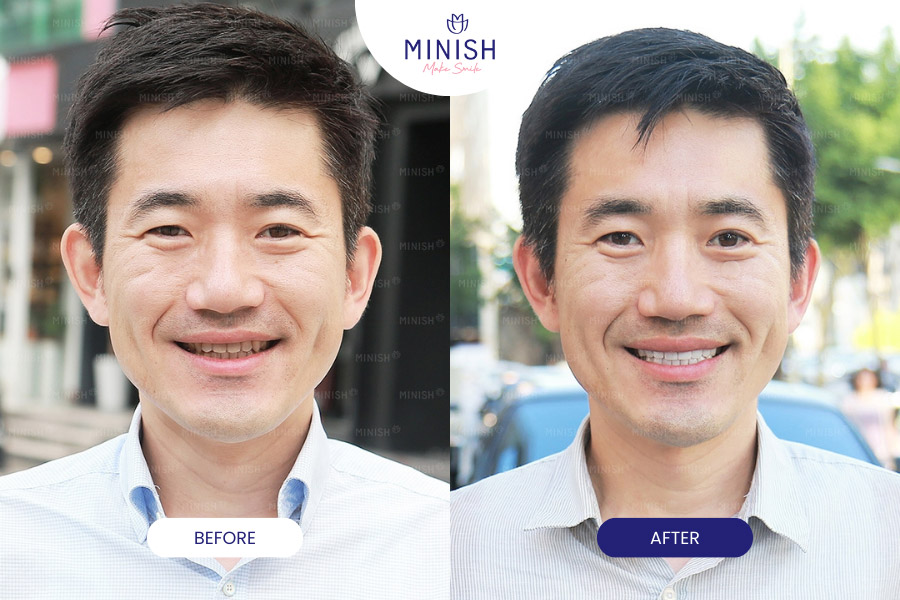
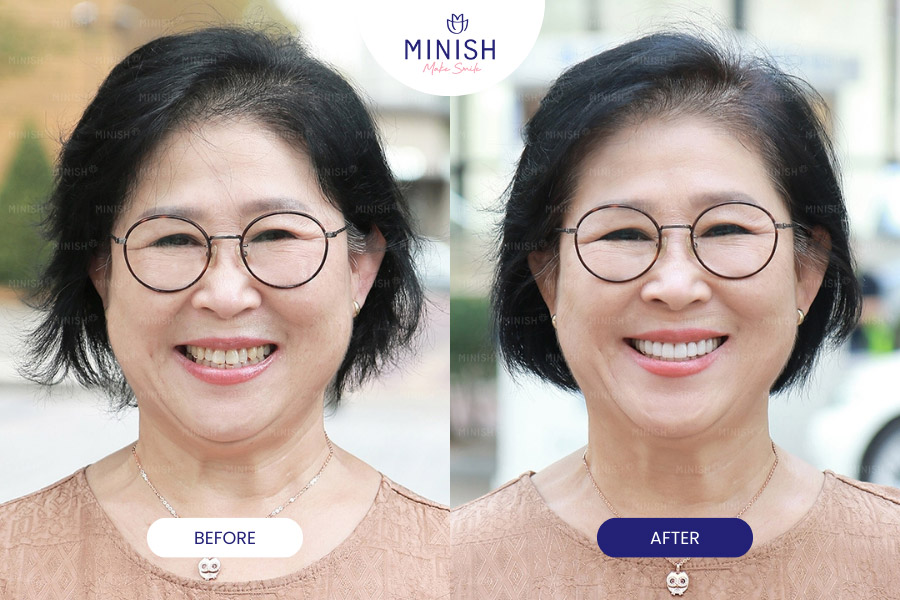
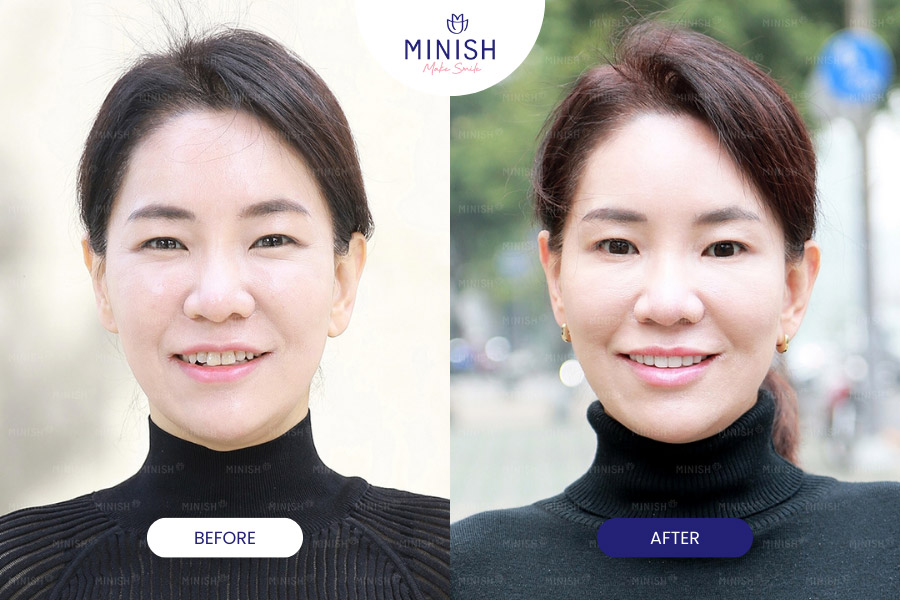
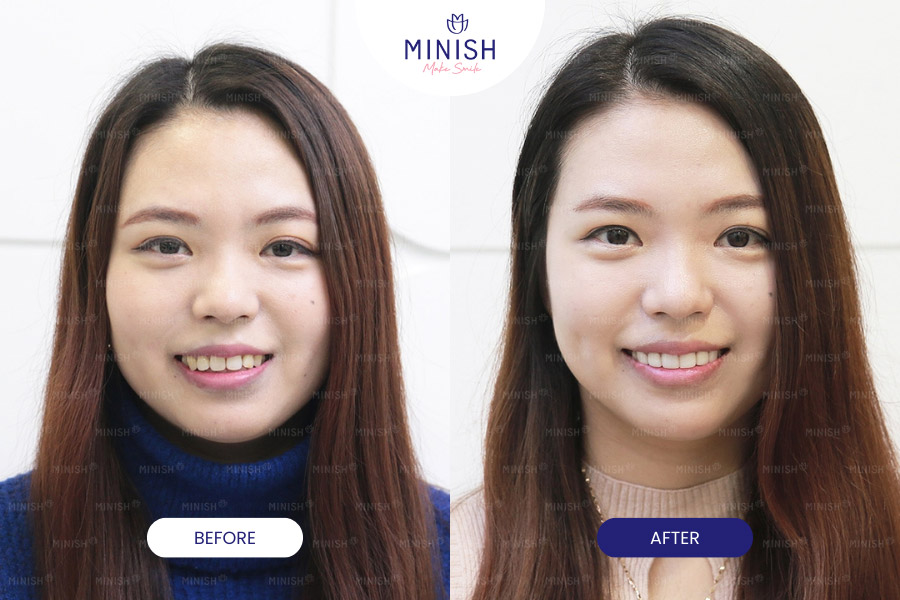
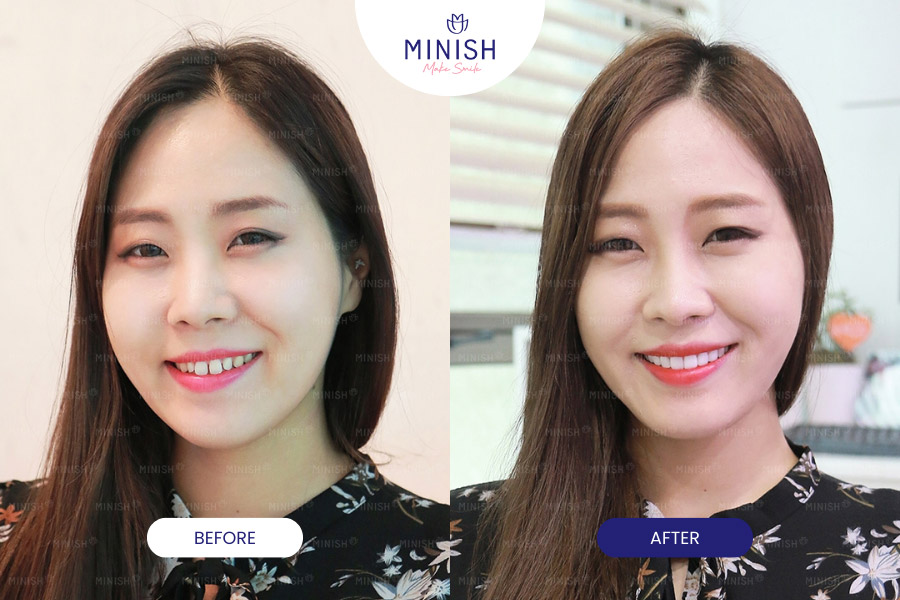
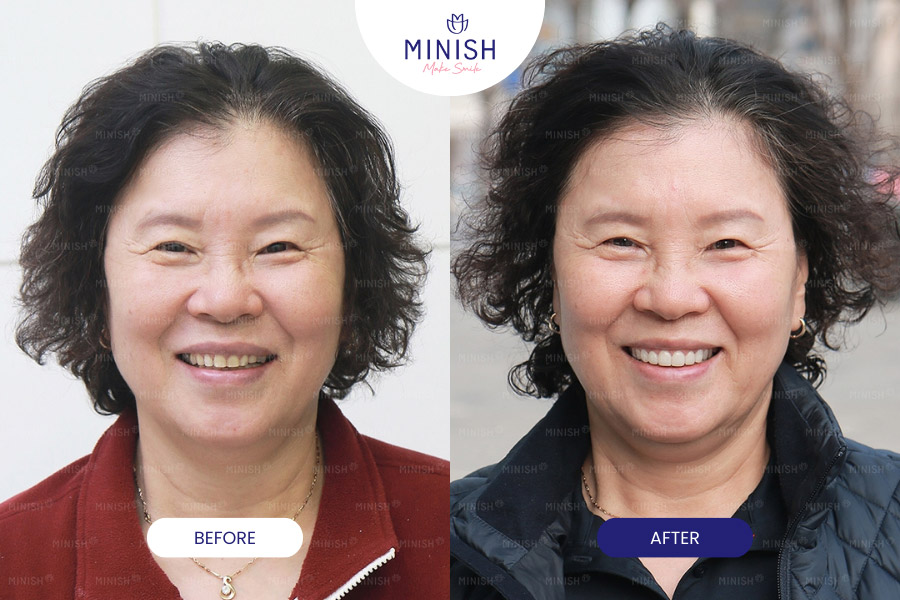
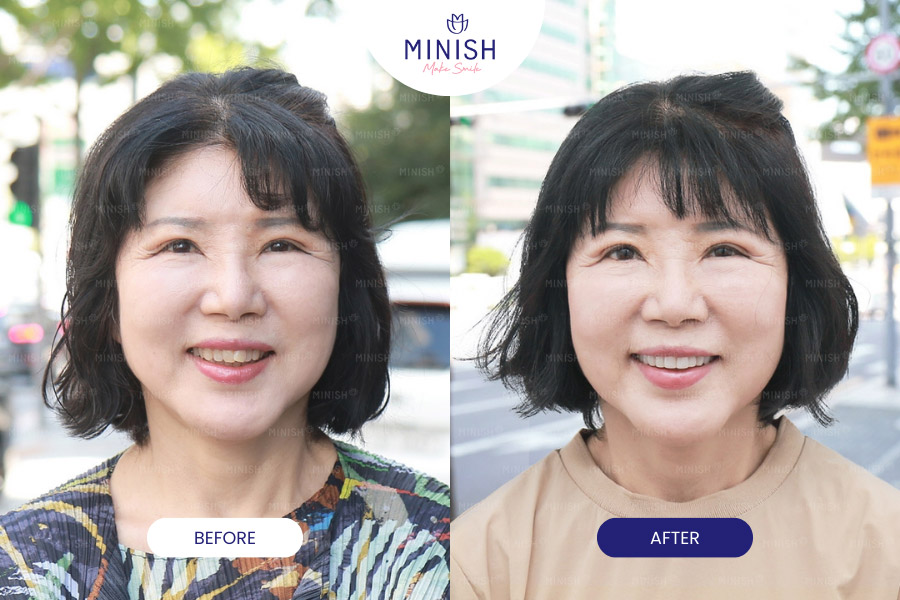
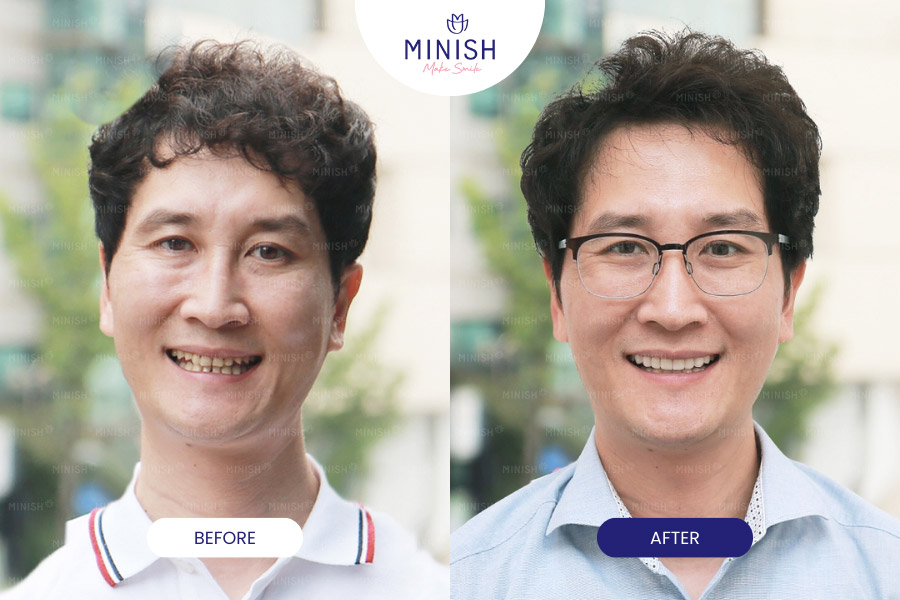
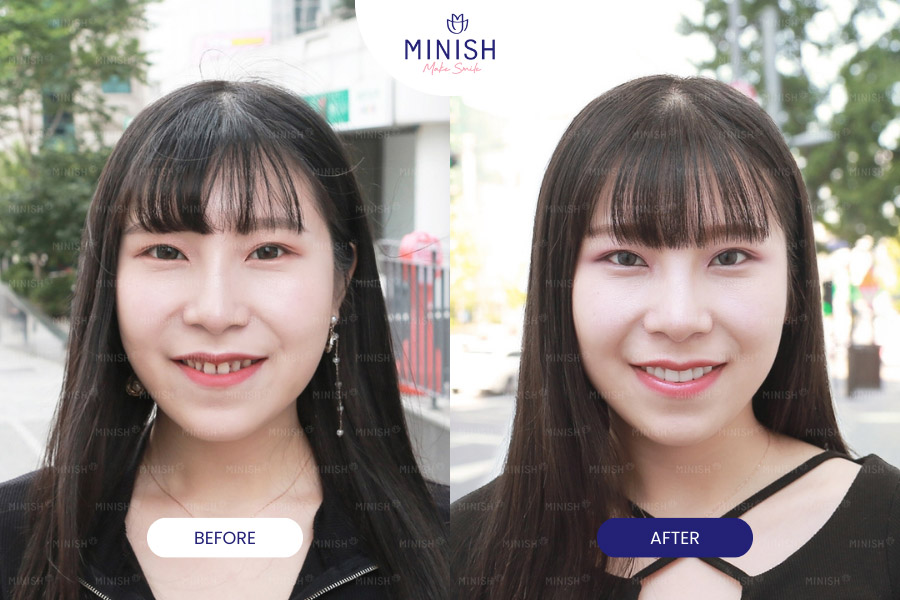
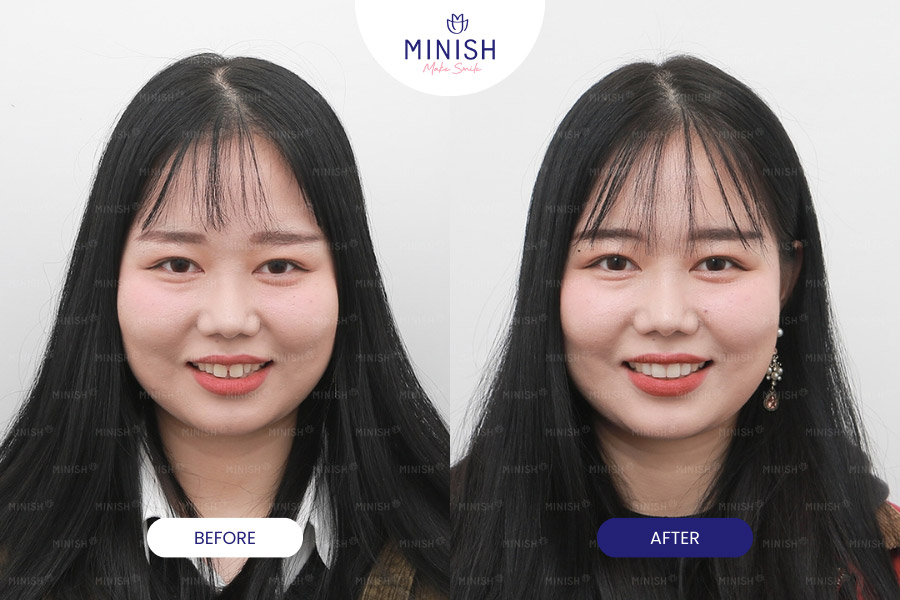
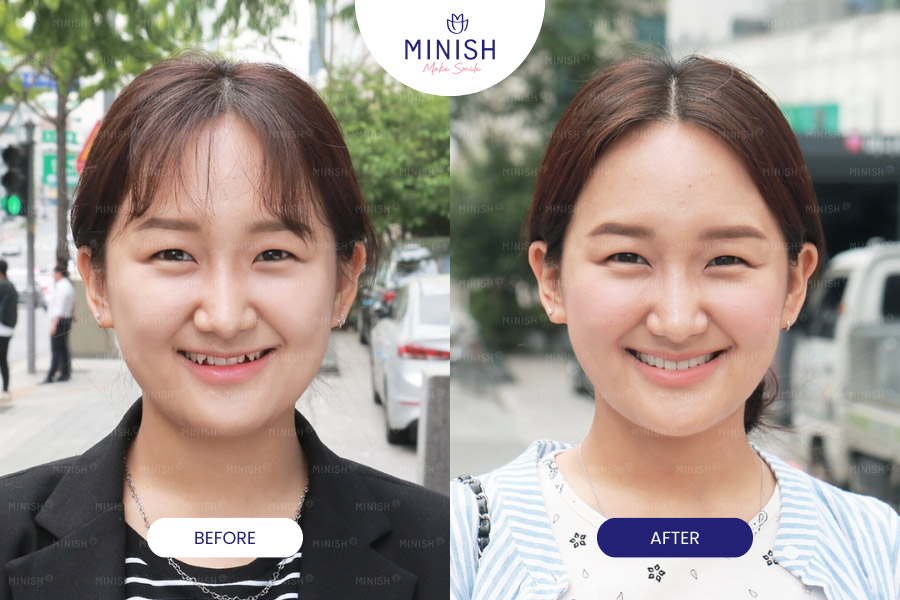
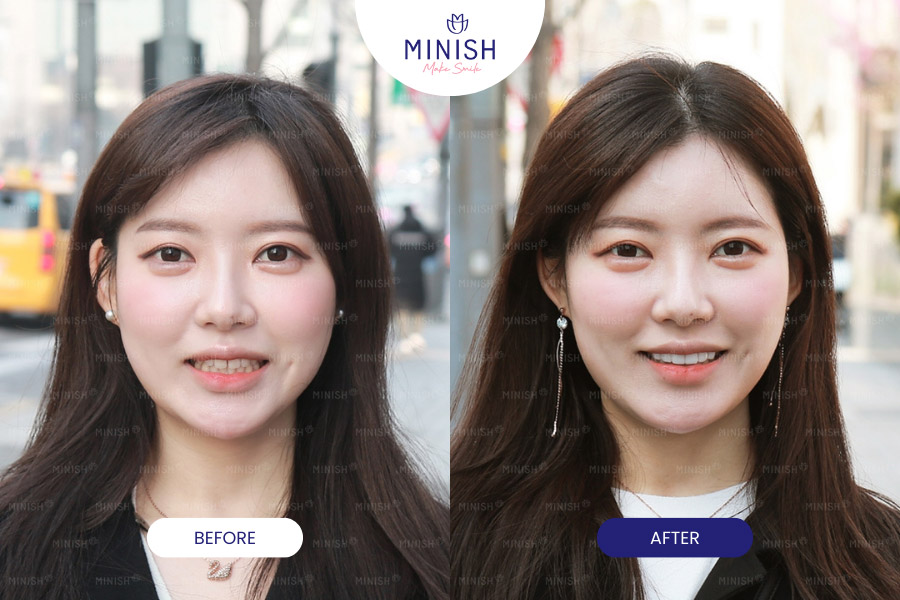
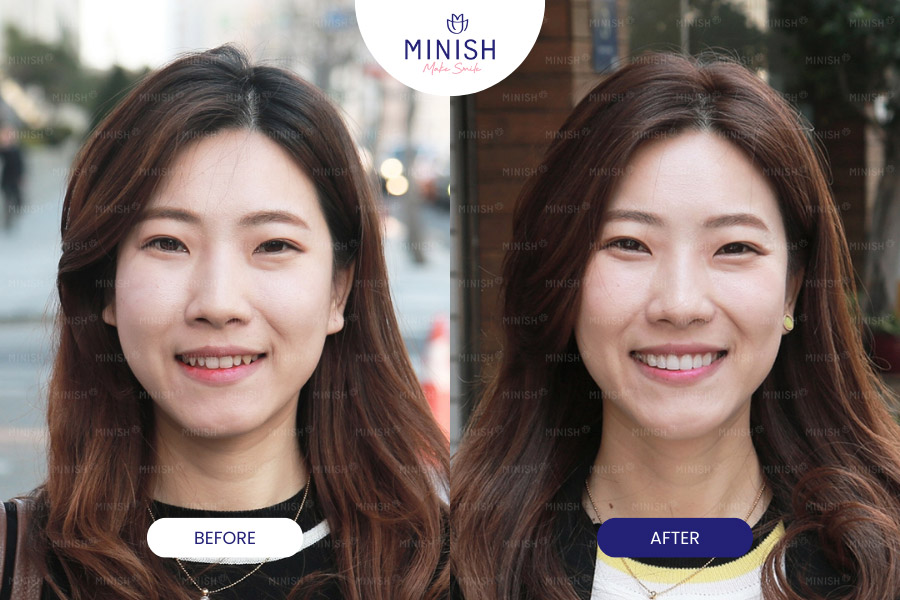
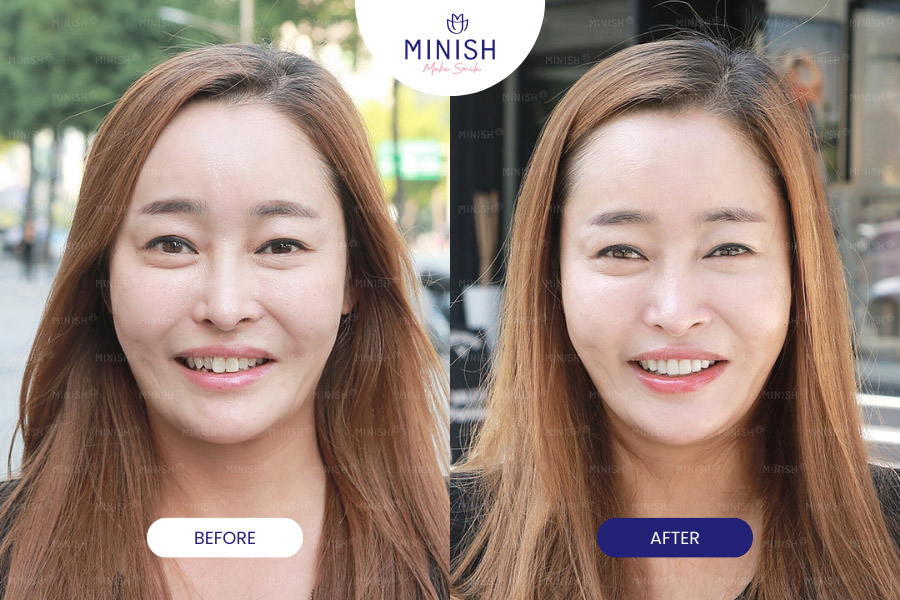
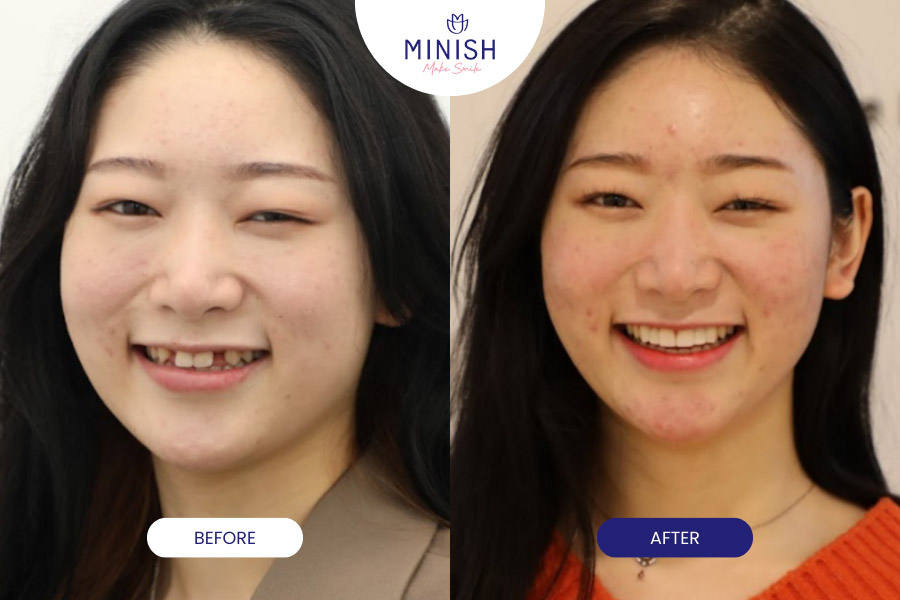
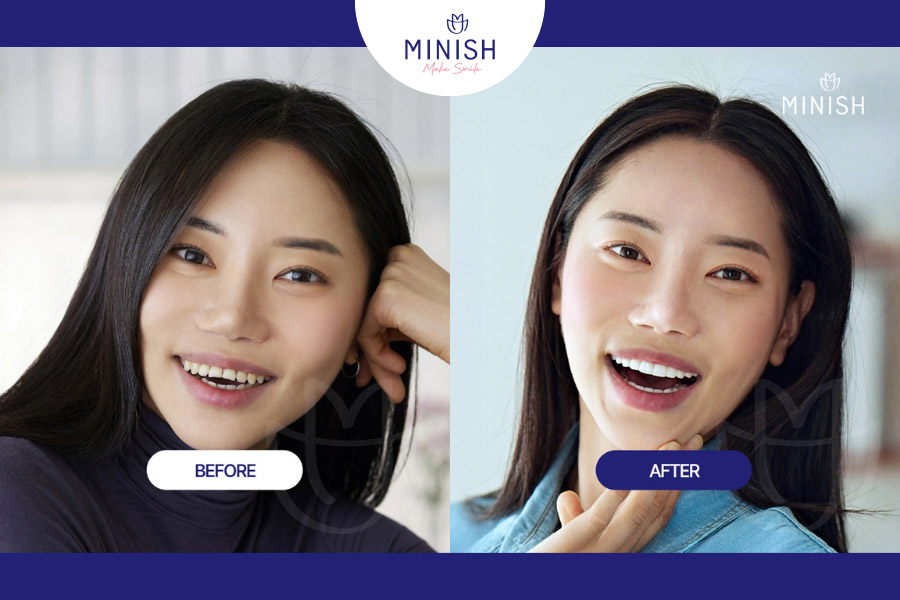
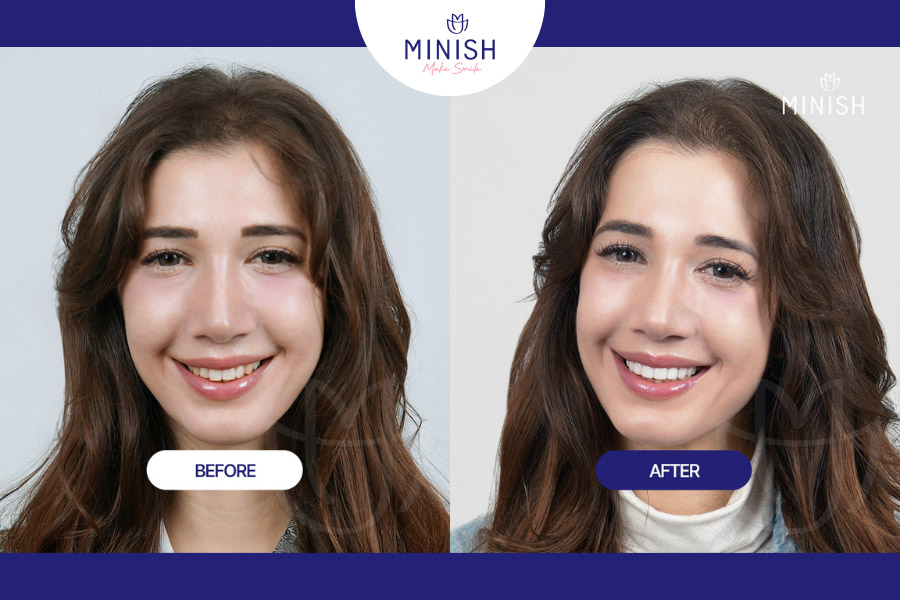
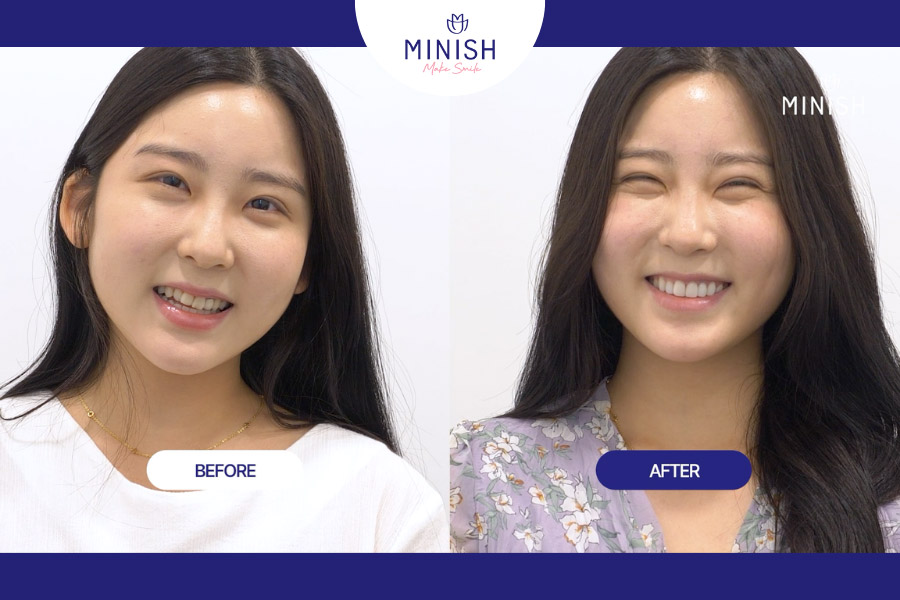
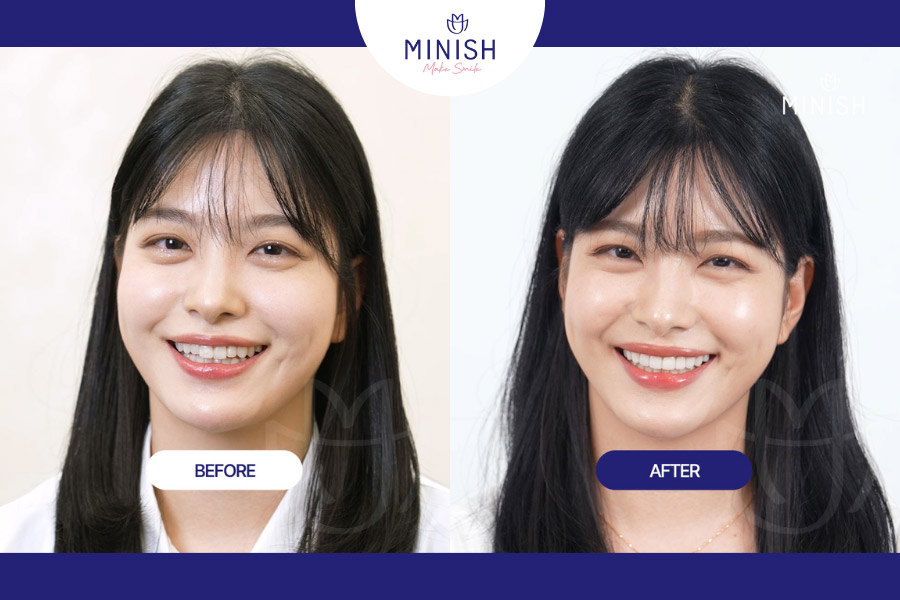
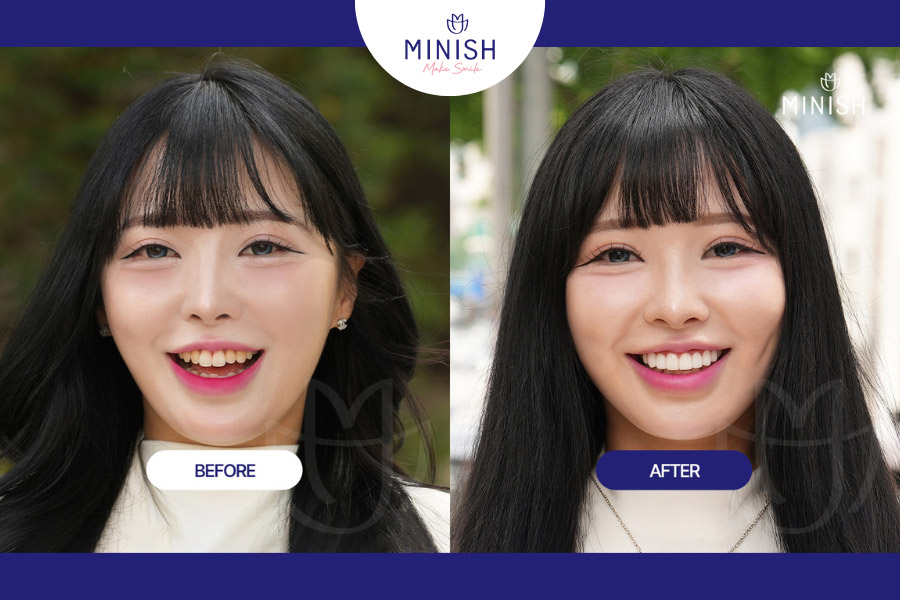
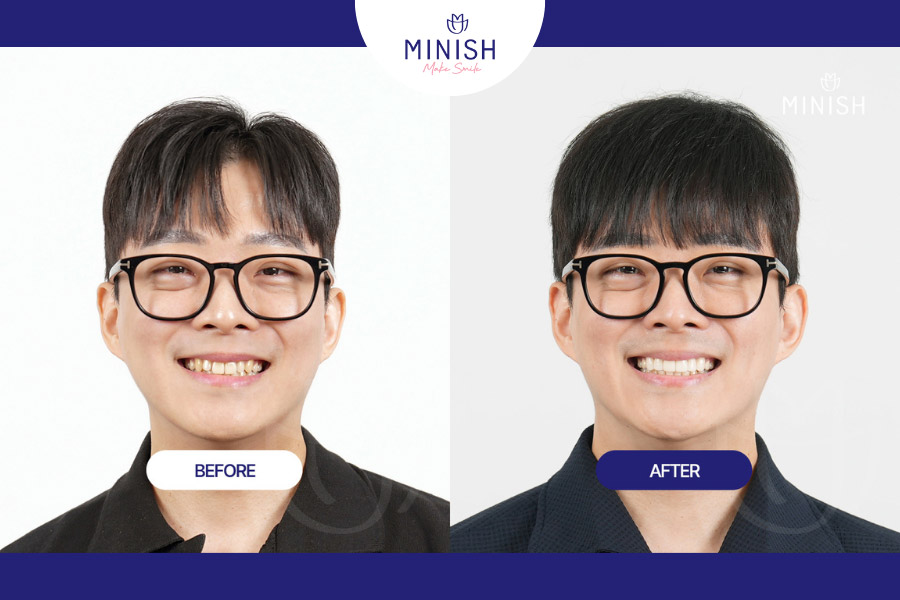
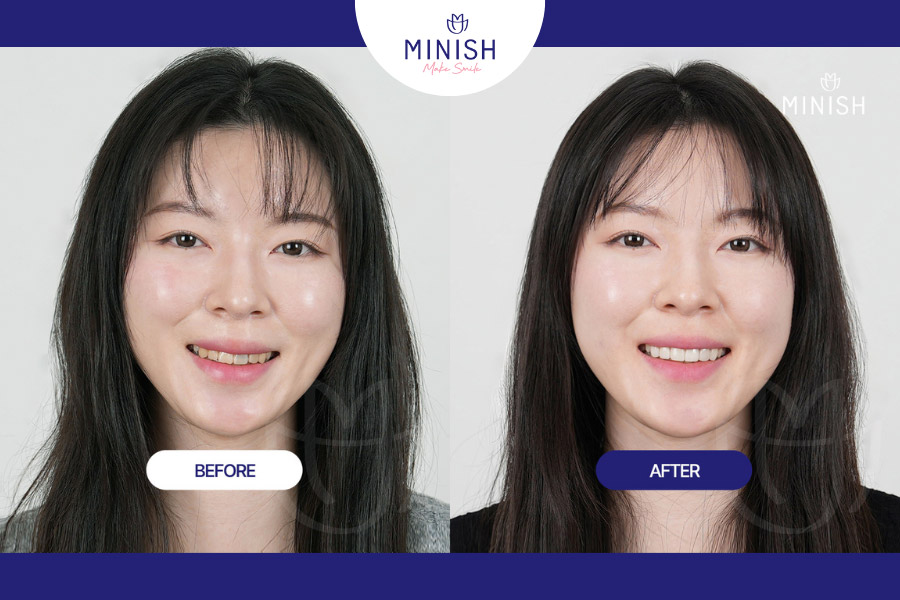
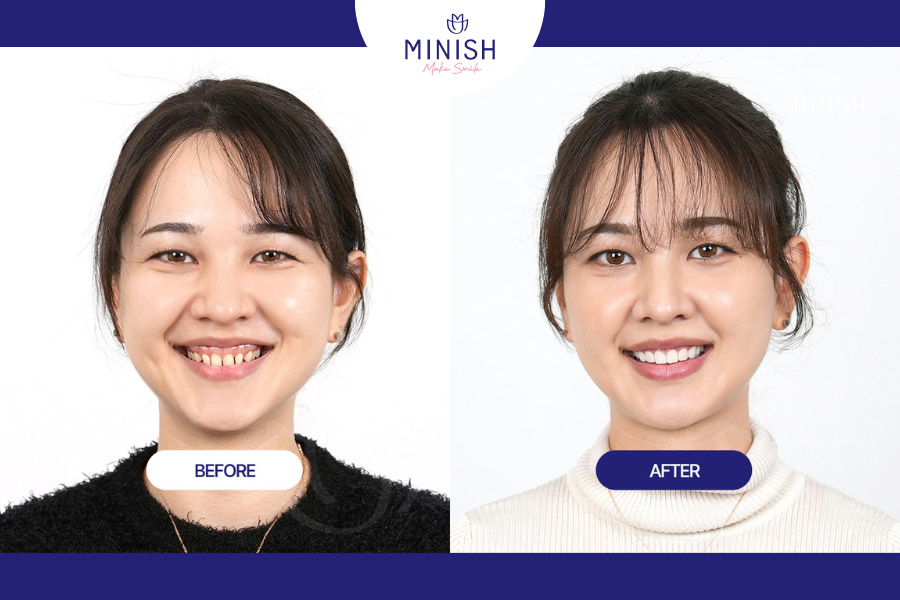
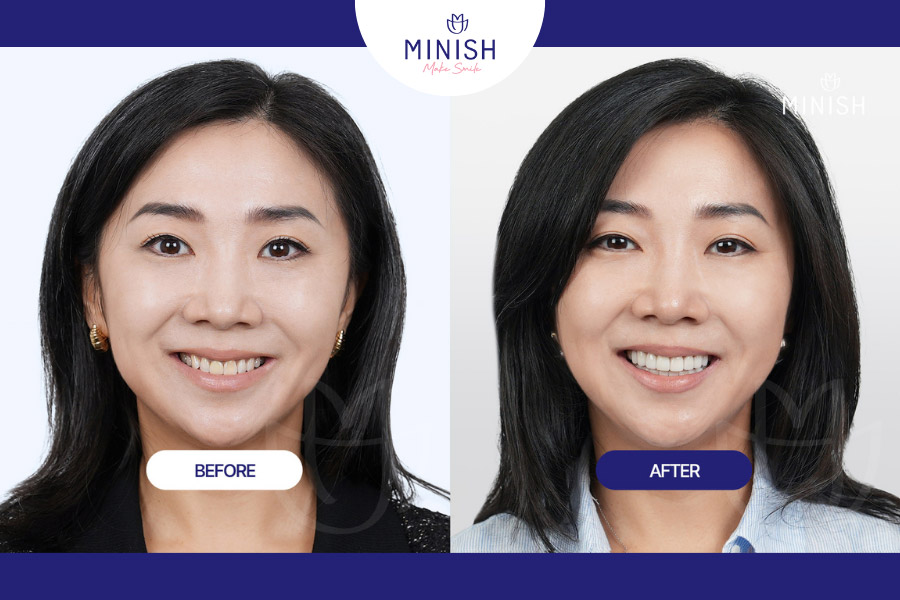
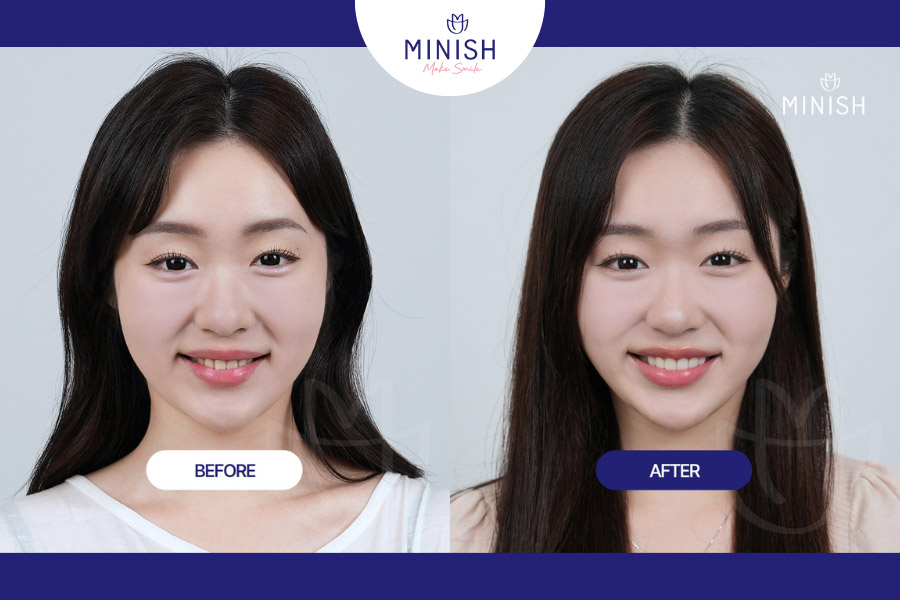
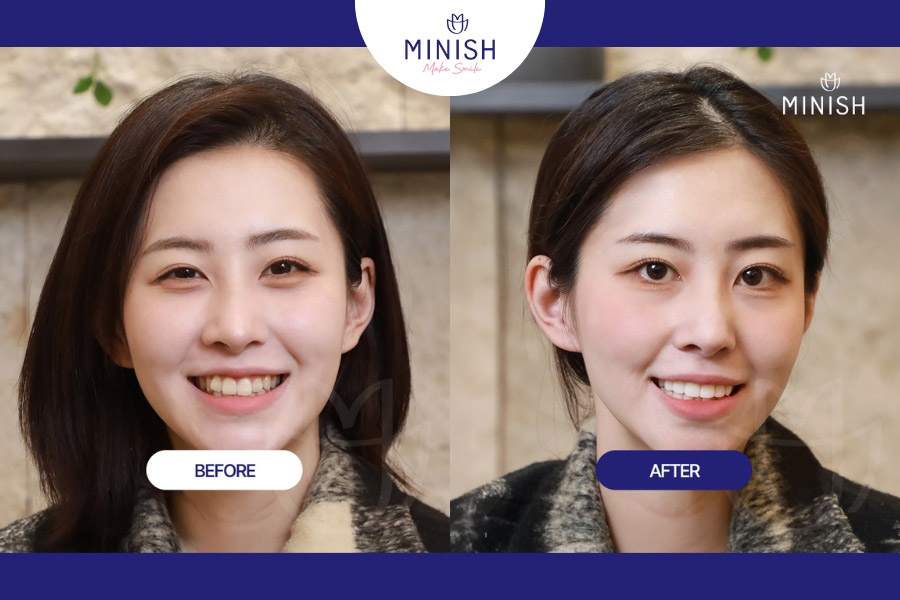
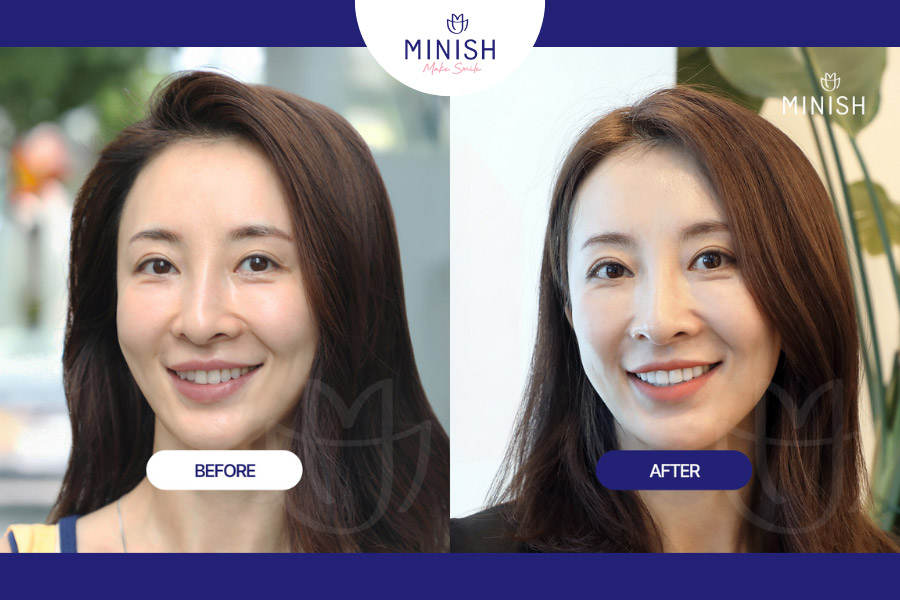
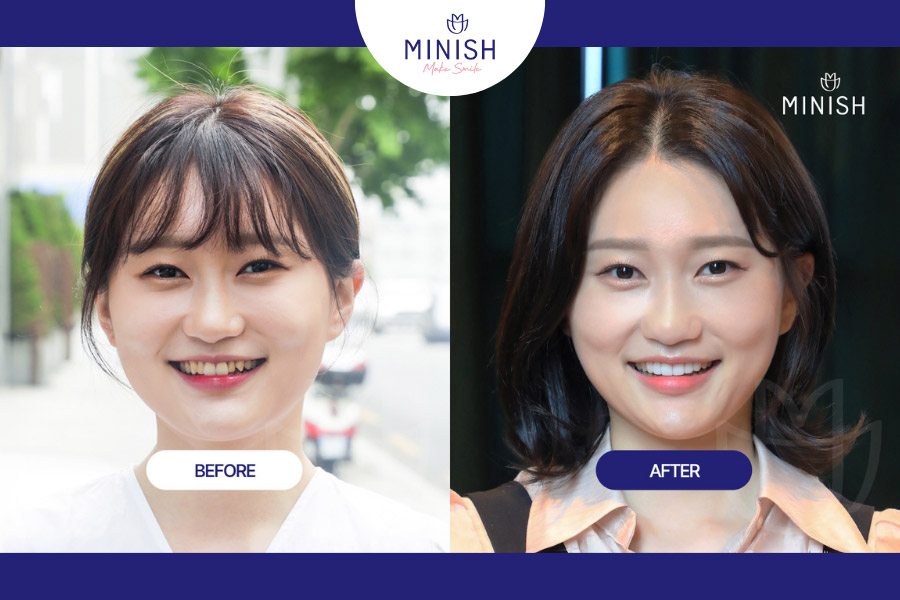
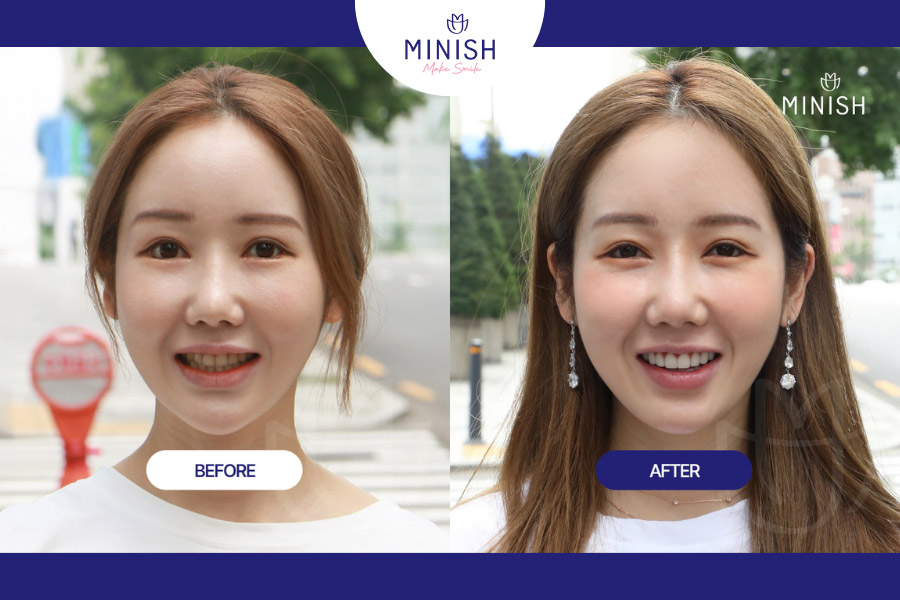
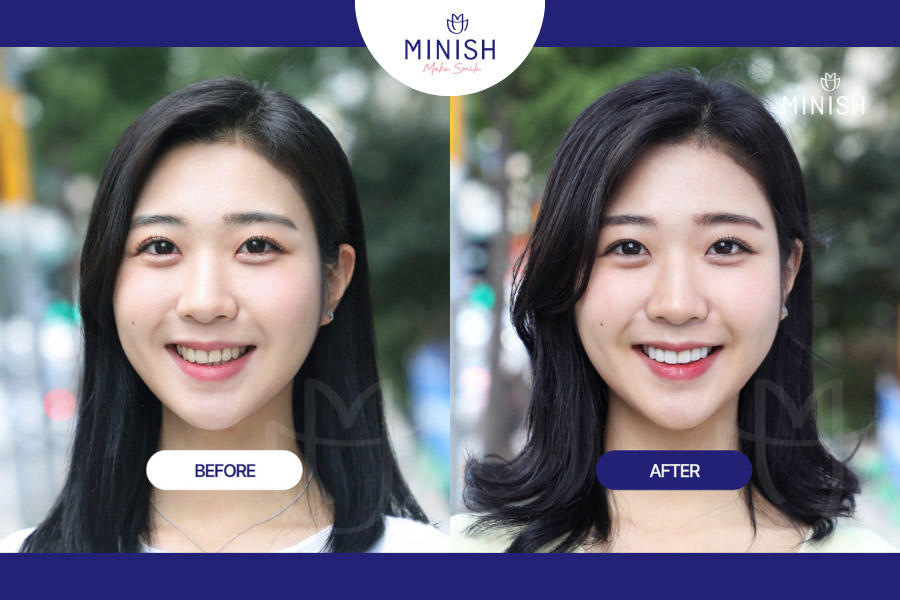
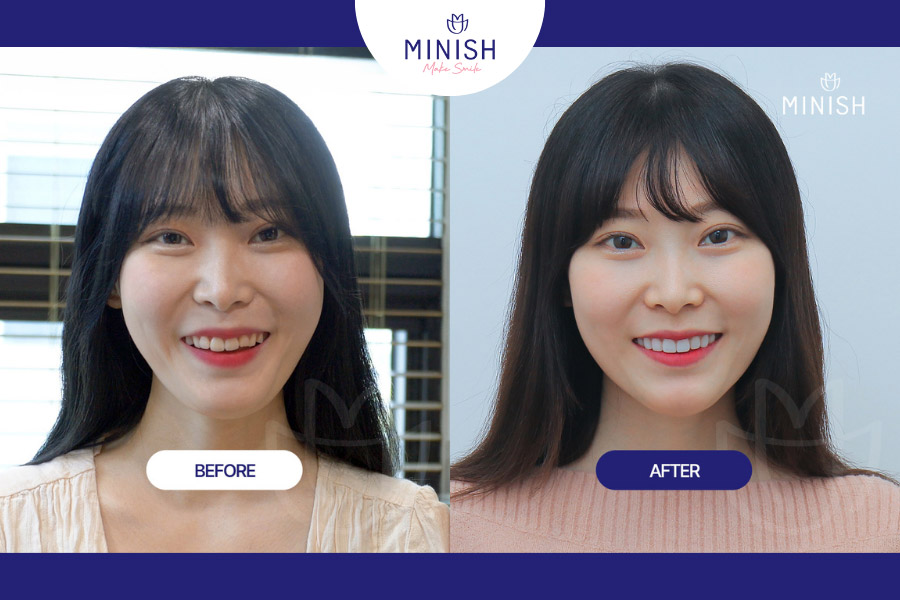
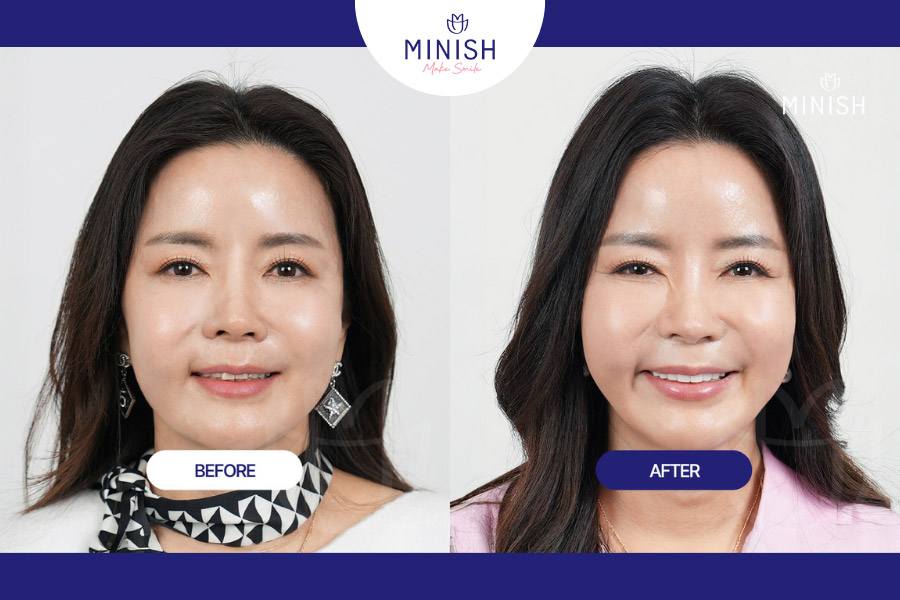
- MINISH Before & After
What Are Laminate Veneers?
Laminate veneers are a cosmetic treatment designed to enhance the appearance of the front teeth. Traditionally, the dentist reduces a thin layer of enamel and bonds a thin ceramic shell to the prepared surface.
This approach can be more conservative than full crowns (which require shaping the entire tooth). However, when too much enamel is removed—or if planning is rushed—patients may experience issues such as post-treatment sensitivity or pain, which contributes to negative perceptions of veneers.
“No-Prep Veneers”: Why the Term Can Be Misleading
You may see ads for “no-prep laminate veneers.” Since veneers are fundamentally a treatment that involves preparing the tooth surface to bond a thin ceramic layer, “no-prep” can be confusing.
In many cases, the phrase is used as marketing language that appeals to understandable fears about tooth reduction. It’s important to know:
- “No-prep laminate veneers” is not a standard textbook term
- It is not an officially recognized expression
- It can create unrealistic expectations that veneers are suitable for everyone
When “No-Prep Veneers” May (Rarely) Be Appropriate
True “no-prep” approaches may work only in very limited cases, such as:
- Microdontia (naturally small teeth)
- Spaced teeth
- Teeth positioned inward
Because veneers add material, they can sometimes help when teeth are small or have gaps. However, if applied to teeth that are already normal-sized, prominent, wide, or crowded, the result can look:
- Bulky or unnaturally thick
- Less harmonious with the face and smile
- Like the teeth became “bigger,” not more refined
MINISH vs. No-Prep Veneers: Key Differences That Matter to Medical Tourists
Below is a practical comparison for patients traveling to Korea for high-quality restorative and aesthetic dentistry.
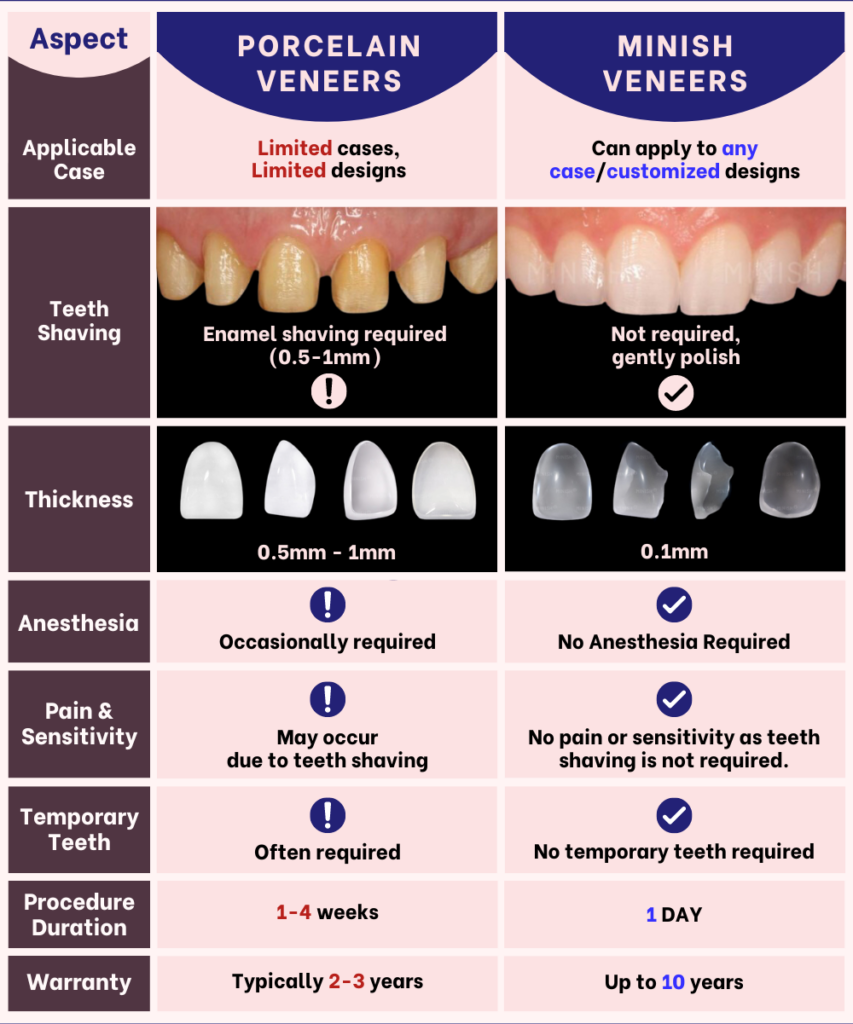
Purpose: Cosmetic Enhancement vs. Tooth Restoration
No-prep veneers are primarily focused on appearance improvement.
MINISH was developed to address concerns about enamel removal in conventional veneer approaches. It is a tooth restoration solution that prioritizes:
- Restoring chipped, worn, or decayed teeth
- Preserving healthy tooth structure
- Achieving natural aesthetics as a result of restoring tooth health, not by sacrificing it
Treatment Range: Front Teeth Only vs. All Teeth (Including Molars)
No-prep veneers are generally limited to front teeth, and are not suitable if you want to:
- Reduce the size of normal teeth
- Reduce long or wide teeth
- Move protrusive teeth inward
- Correct significant misalignment
MINISH can be applied to all teeth—including molars. For molars, crowns are often used but typically require substantial reduction. With molar MINISH, the goal is to remove only the damaged area as conservatively as possible while restoring:
- Chewing function
- Structural stability
- Natural-looking form
(Exceptions may apply in cases requiring orthognathic surgery.)
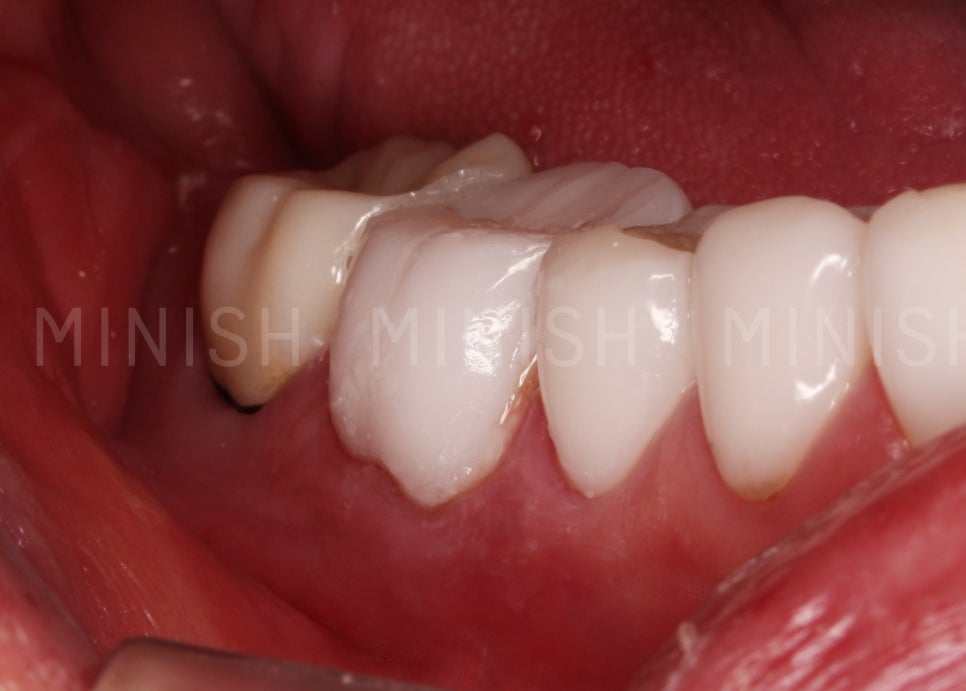
Bonding & Longevity Considerations
Because no-prep veneers may be bonded without adequate surface preparation, they can carry a higher risk of:
- Weaker bonding
- Debonding
- Increased chance of cracking from relatively minor impact
MINISH is designed to avoid these limitations through a restoration approach focused on precise fit and bonding protocols. In some retreatment cases (such as teeth previously treated with crowns elsewhere), masking discoloration may be more challenging—this is typically limited to specific prior-treatment scenarios.
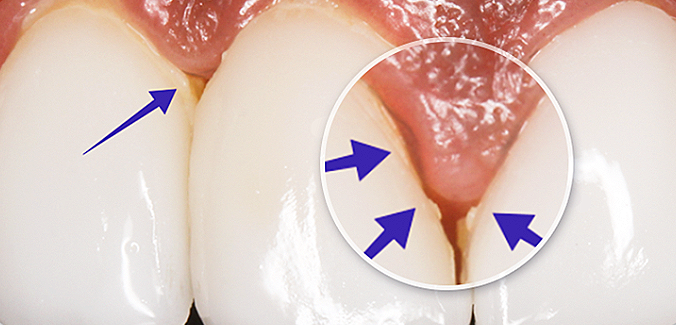
However, MINISH is precisely customized for each individual tooth and applied using an accurate bonding protocol, minimizing the risk of such complications.
Clinical History: New Marketing Trend vs. A System Developed Since 2009
“No-prep veneers” have existed as a concept, but their recent popularity is often driven by advertising focused on fear of tooth reduction.
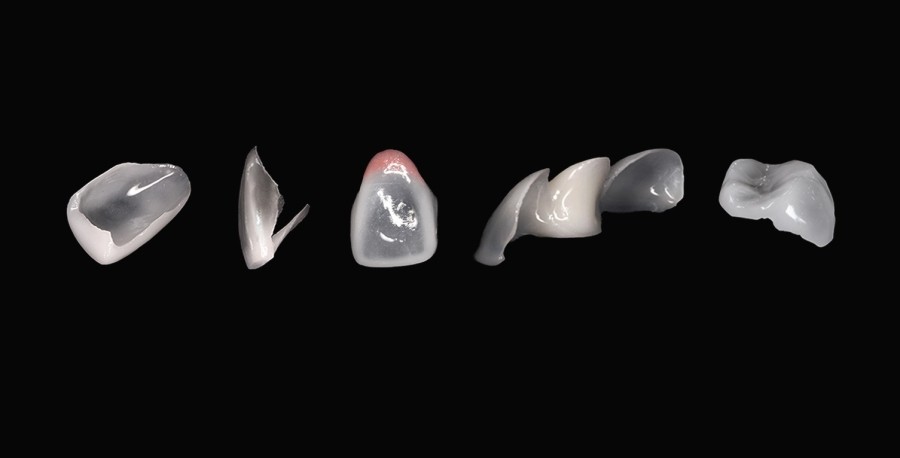
MINISH began research and development in 2009, and has expanded into multiple clinically-driven solutions, including:
- Dual MINISH (coverage from front and back)
- Pink MINISH (a method designed to support the appearance of gum regeneration in recession cases)
- MINISH Bridge (an alternative to traditional bridge methods that often require heavy reduction of adjacent teeth)
- One-Day MINISH system and molar MINISH (introduced as the system evolved)
Who Performs It: General Simplicity vs. Specialized Training
No-prep veneer bonding can be relatively straightforward and may not require specialized training.
MINISH requires a high level of precision and standardized technique. Clinicians complete education through the MINISH Academy, including hands-on training in:
- Tooth contouring
- Bonding protocols
- Fit and finishing procedures
Materials: Zirconia/E.max vs. MINISH Block (Tooth-Like Properties)
No-prep veneers often use materials such as:
- Zirconia (very strong, but may transmit stress to supporting structures and can affect opposing teeth over time)
- Opaque E.max (can be harder to blend naturally depending on shade/translucency needs)
MINISH uses “MINISH Block,” engineered to mimic natural tooth characteristics, including:
- Biocompatibility
- Strength profiles (fracture/compression/tensile)
- Wear resistance and elasticity
- Translucency
- Thermal expansion similar to teeth
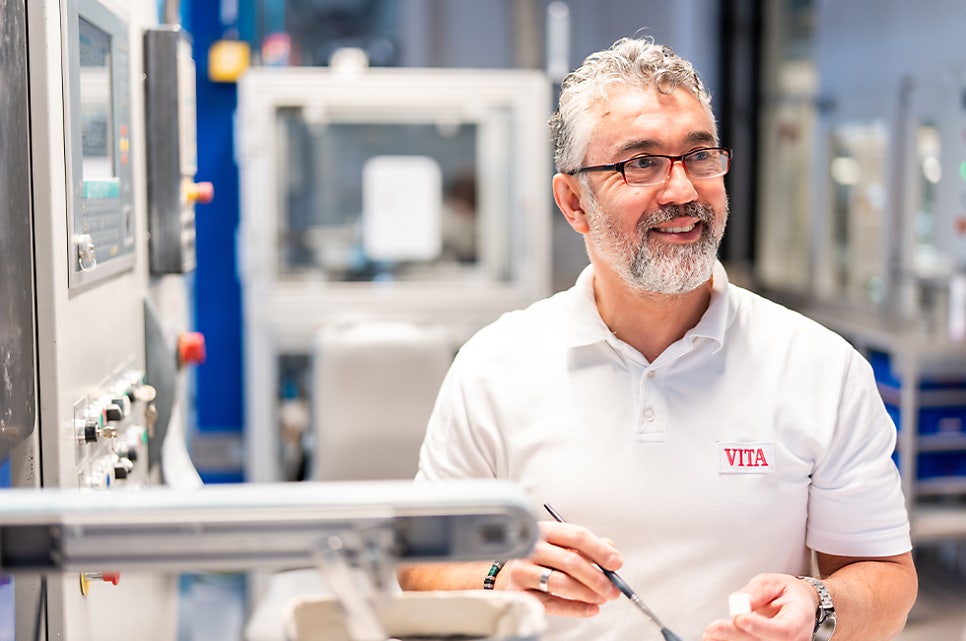
MINISH Block was developed with VITA, a global dental materials company supplying to many countries, and is produced exclusively for MINISH.
Warranty: Varies Widely vs. Up to 10 Years
Warranty periods for no-prep veneers commonly range around 1–2 years, and some clinics offer none. When long warranties are advertised without long-term follow-up, it’s reasonable to ask what evidence supports those claims.
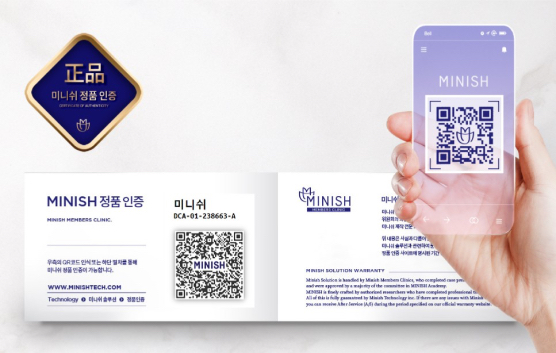
MINISH offers a warranty up to 10 years, based on long-term follow-up outcomes. Patients also receive a MINISH Box with oral models showing before-and-after conditions—helping you clearly understand the changes and the amount of tooth reduction involved.
Why Many International Patients Choose MINISH in Korea
A key concern for medical tourists is what happens years after treatment, not just the initial photos. Dental problems can develop slowly and may not be obvious in the first 1–2 years.
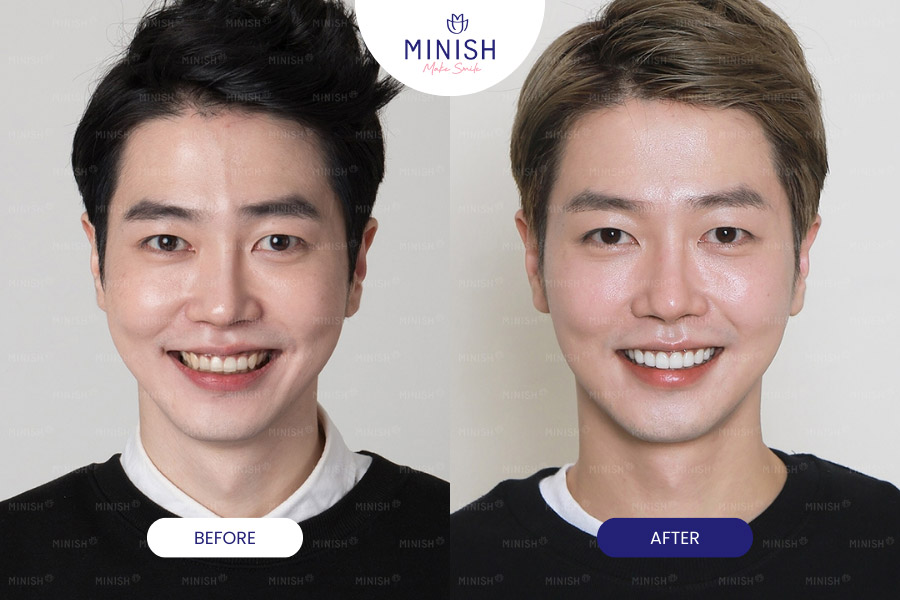
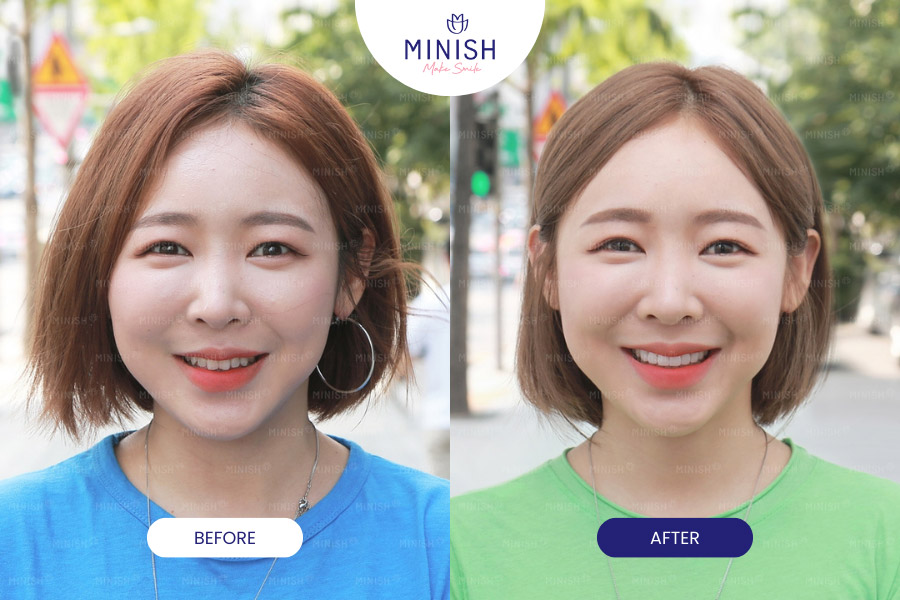
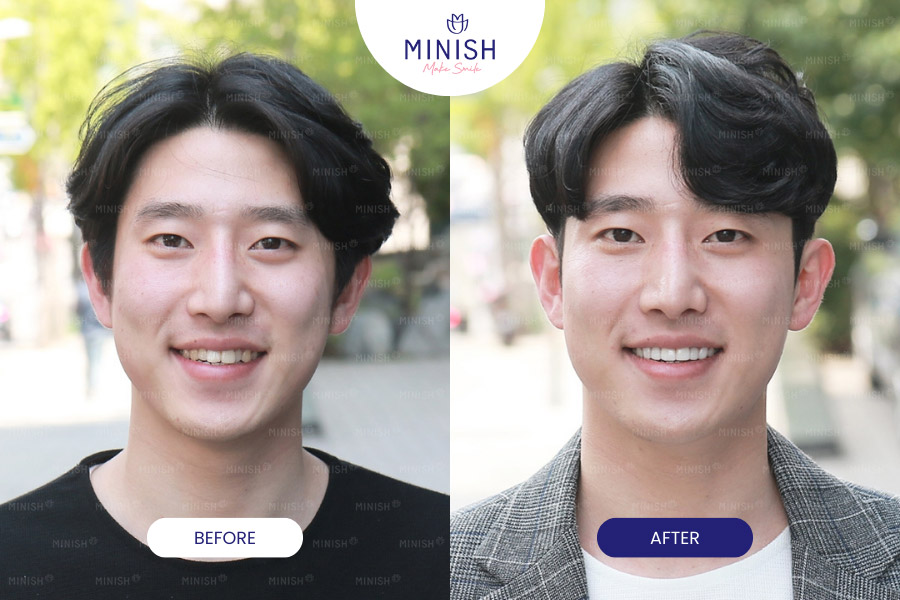
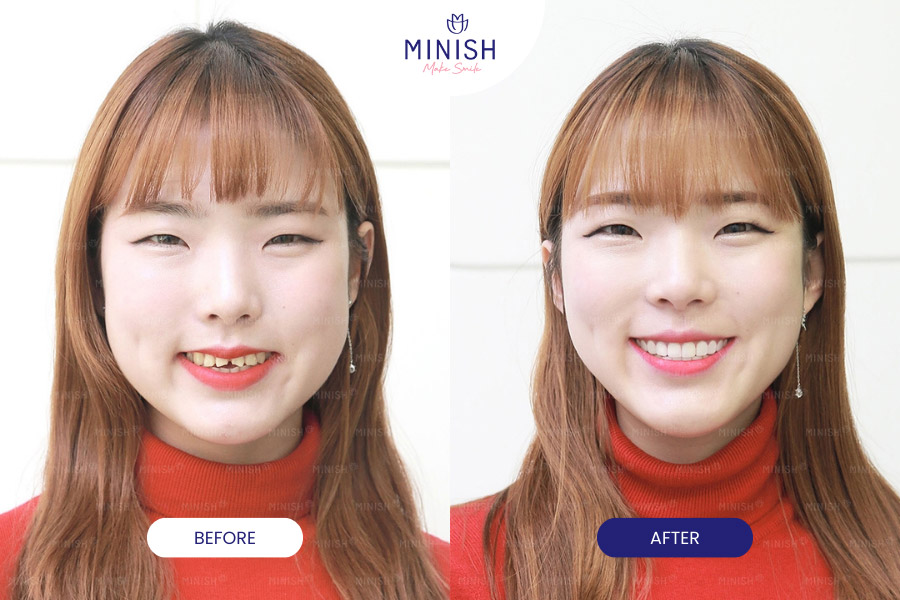
MINISH has accumulated data from approximately 160,000 clinical cases since 2009 and has been chosen by many public figures and professionals—reflecting both technical demand and trust in outcomes.
Planning Your Visit: What We Recommend Before You Travel
If you’re visiting Korea for MINISH or veneer-style treatment, consider preparing:
- A list of your goals (whiter teeth, closing gaps, repairing chips, bite comfort)
- Photos of your current smile and desired style
- Any past dental history (crowns, root canals, orthodontics)
- A timeframe for your stay (some options may be available in accelerated schedules)
We’ll help guide you toward an option that matches your teeth, bite, and long-term health—rather than a one-size-fits-all cosmetic approach.
Note: This article was translated and published from the original with consent from the author.
Contact Us
Start Your New Smile Today
Contact us for English speaking dentists in Korea. We are contacted daily by local and international patients who work in multiple time zones and in various countries